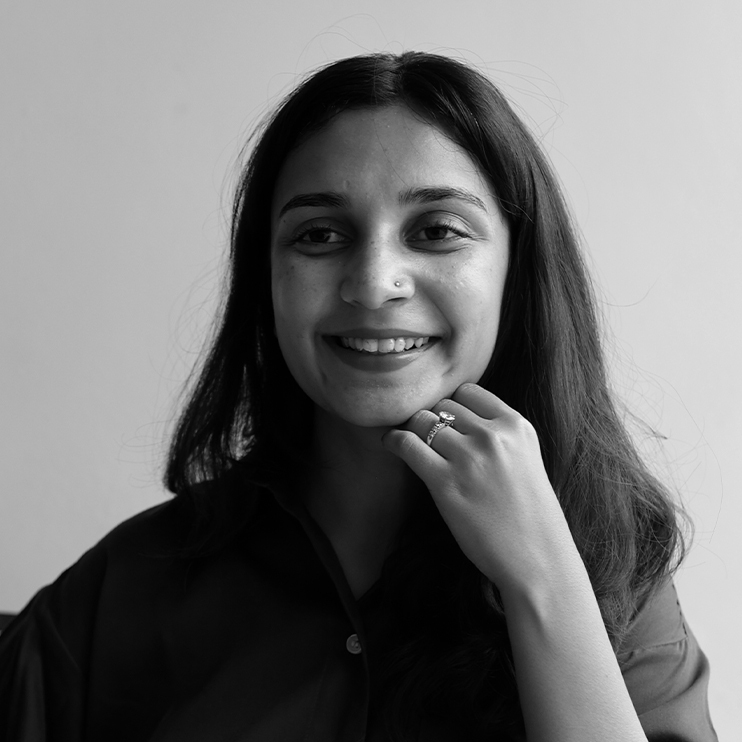
A Home for Imagination: Richa Agarwal's Journey to Strengthen India's Cultural Futures
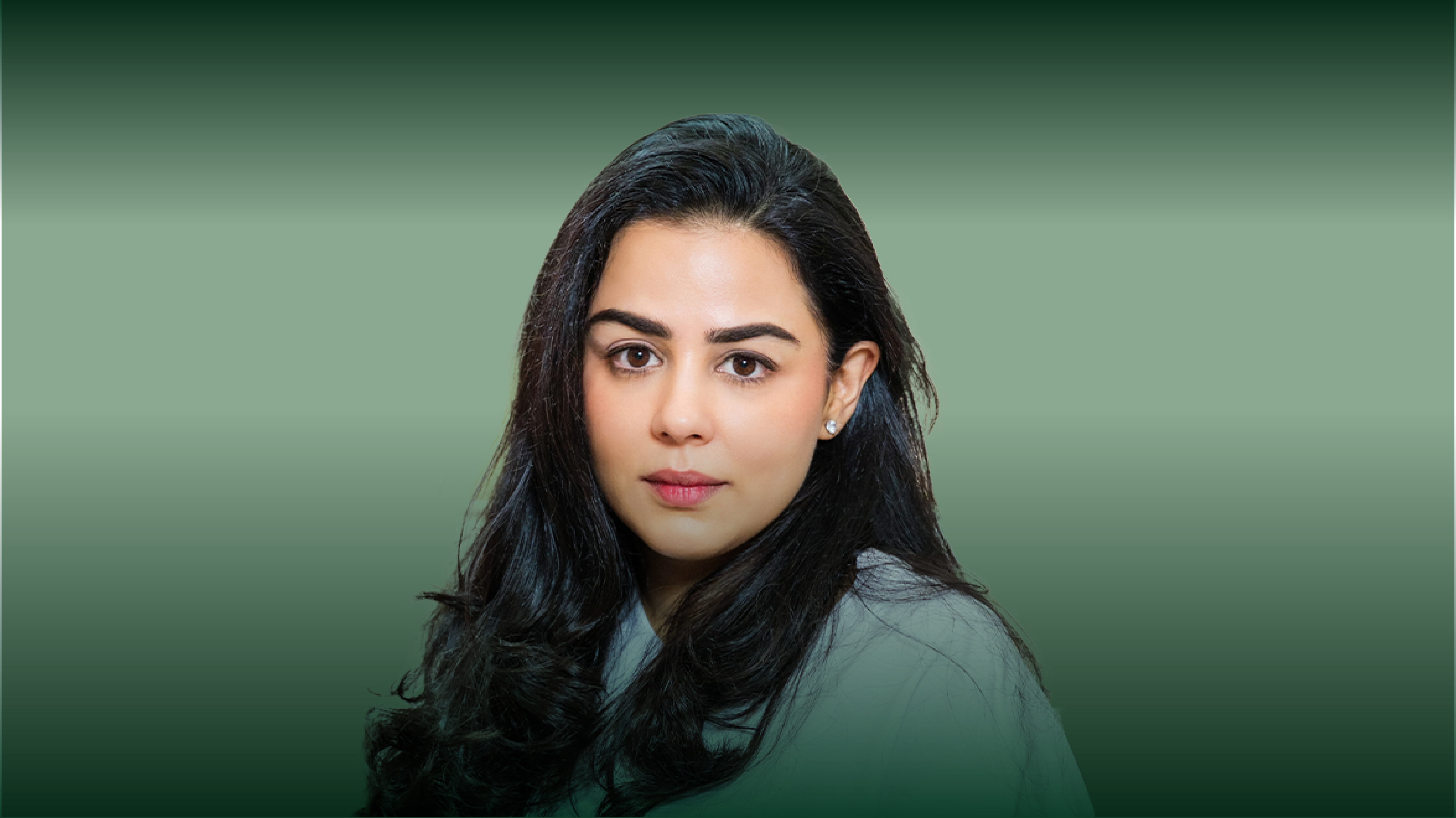
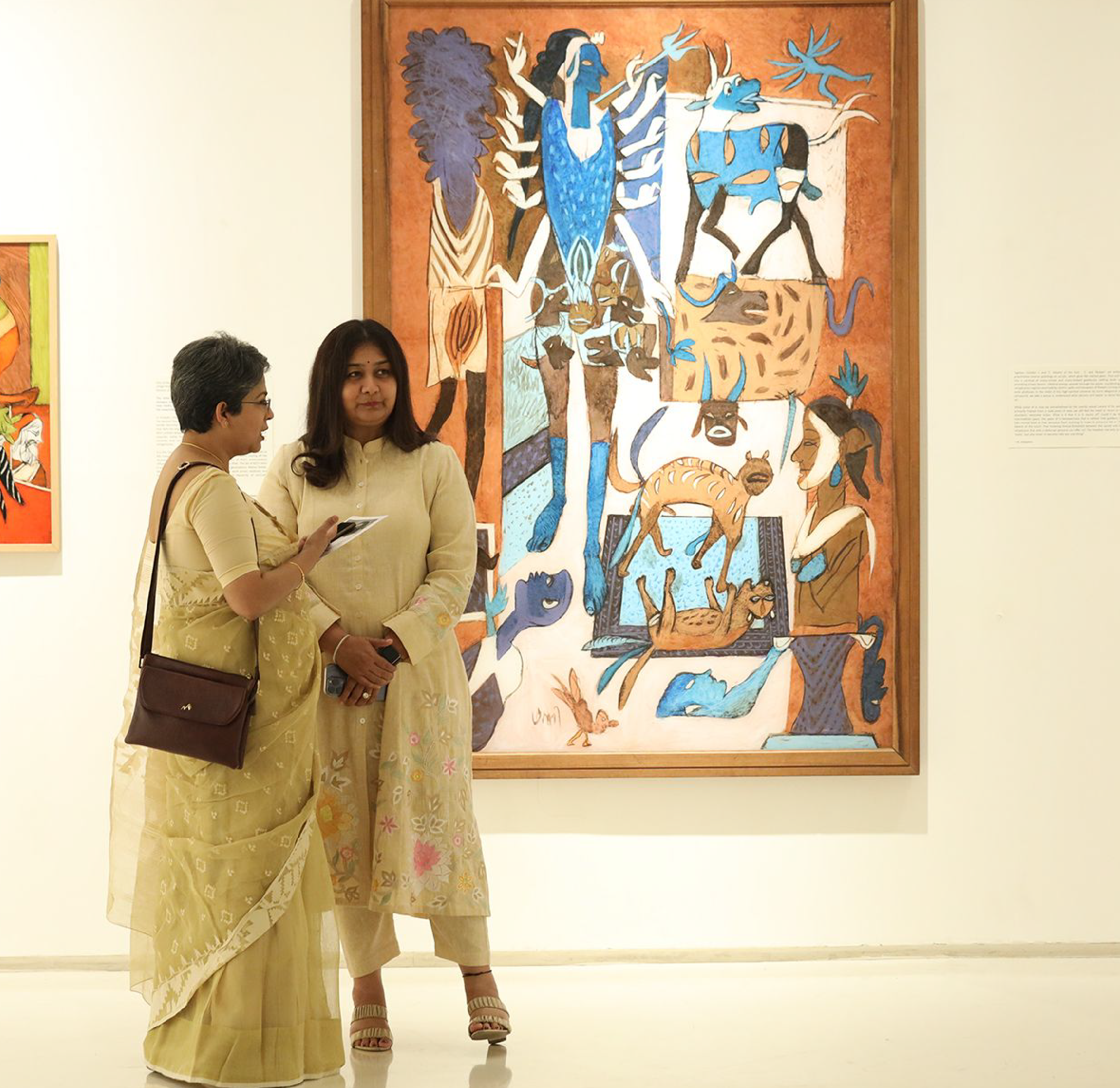
Richa Agarwal often recalls a moment that has stayed with her. It was an early afternoon at the newly opened Kolkata Centre for Creativity (KCC). A young art student from Howrah and an elderly woman from Ballygunge had found themselves standing before the same installation, debating its meaning with the ease of old friends. “That,” Richa says, “was the first time I saw art dissolving the social distances we take for granted.”
That memory did not only affirm the purpose of KCC, but also revealed to her the deeper promise of what she hoped to build in Kolkata, a city whose artistic spirit has shaped generations but whose public cultural infrastructure has thinned over time. Her philanthropy, she realized then, would be about designing spaces where community, creativity, and cultural continuity could speak to each other. Steadily evolving, her work has been shaped by multiple hands and generations, but remains anchored in a personal conviction: art must be lived with, not looked at from afar.
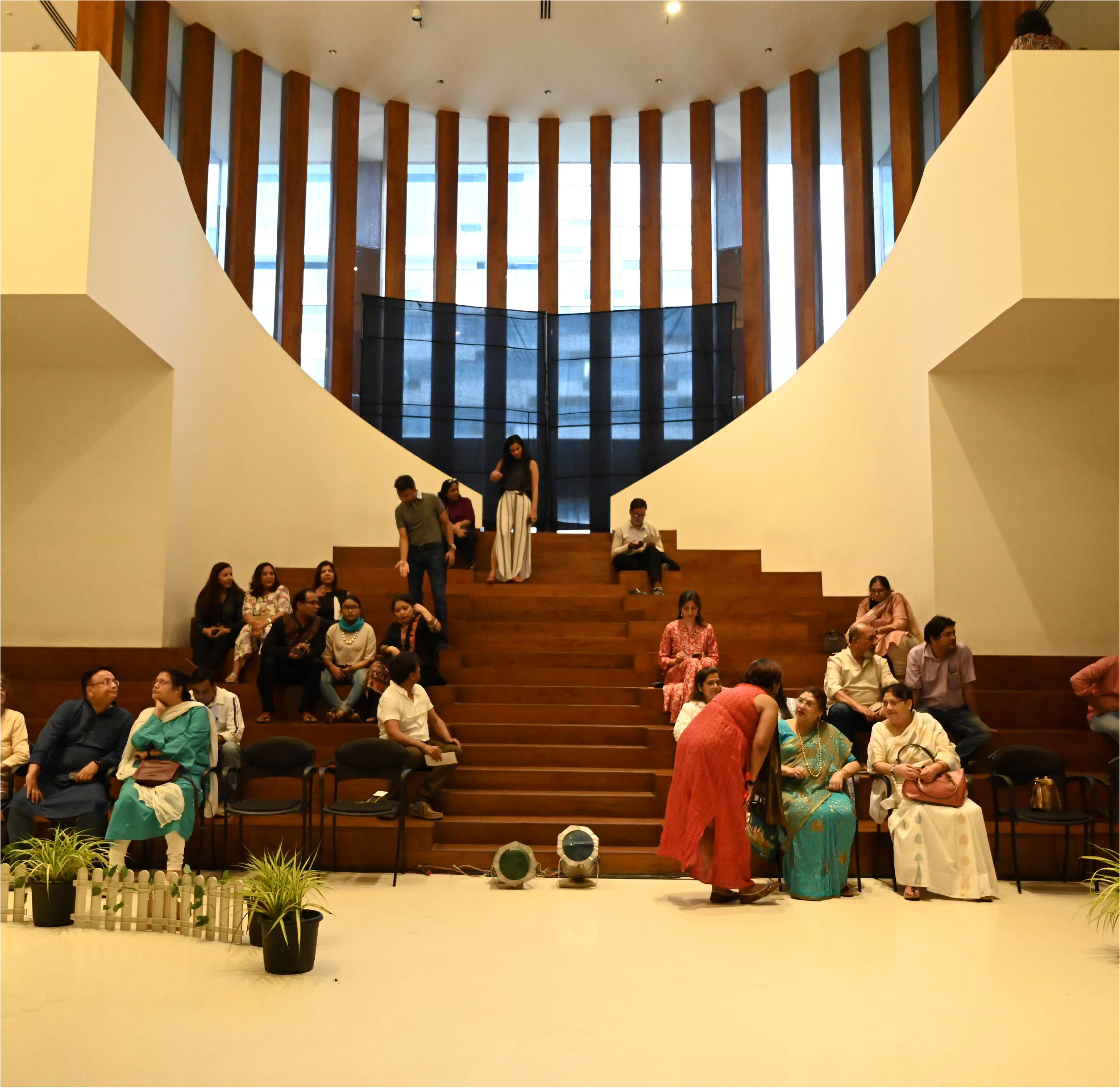
Today, the Kolkata Centre for Creativity (KCC) stands as one of eastern India’s most distinctive cultural spaces — 70,000 square feet of galleries, studios, an amphitheater, learning rooms, and an ever-widening circle of artists, students, and curious visitors. Under Richa’s visionary leadership, KCC and Emami Art have made art, crafts, and cultural practices accessible to a wide audience. In 2025, the KCC hosted more than 120 events, forged over 22 collaborations across 10 venues, welcomed upwards of 40,000 visitors, and worked with more than 150 artists, advancing its mission to nurture creativity and cultural exchange across India.
A Family Story, Told in Art
Richa often returns to the beginning: her father-in-law, R S Agarwal, who decades ago laid the foundation for what would later become the Emami Group’s cultural commitment. An avid reader, writer, and passionate art collector, he had built an extensive collection of priceless works from across the globe. He was determined for his children to inherit not just a thriving business empire, but also a commitment to creativity and cultural stewardship.
She recalls how those early conversations — about cultural preservation, artistic responsibility, and the fragile ecosystems in which artists create — became the seed of the family’s philanthropic direction. “We realized we couldn’t do everything,” Richa says. “But we could do one thing with intention. We could build a space where art felt accessible, where people walked in and felt at home.”
The decision that followed was deliberate: invest in art restoration, cultural infrastructure, and the steady nurturing of artist ecosystems, first in Kolkata, then beyond. “It begins with a small ripple,” Richa reflects. “But a ripple knows how to widen. Artists need continuity,” she says. “They need a trajectory that lets buyers and institutions take notice.”
KCC’s DEAI initiatives fostering inclusive spaces where diverse voices, LGBTQ+ identities, and marginalised communities are seen, heard, and celebrated
“It really reflects what I believe culture can do, which is turn waste into value, creativity into livelihood, and a small personal idea into a shared social purpose, all while keeping people at the center of the process.”
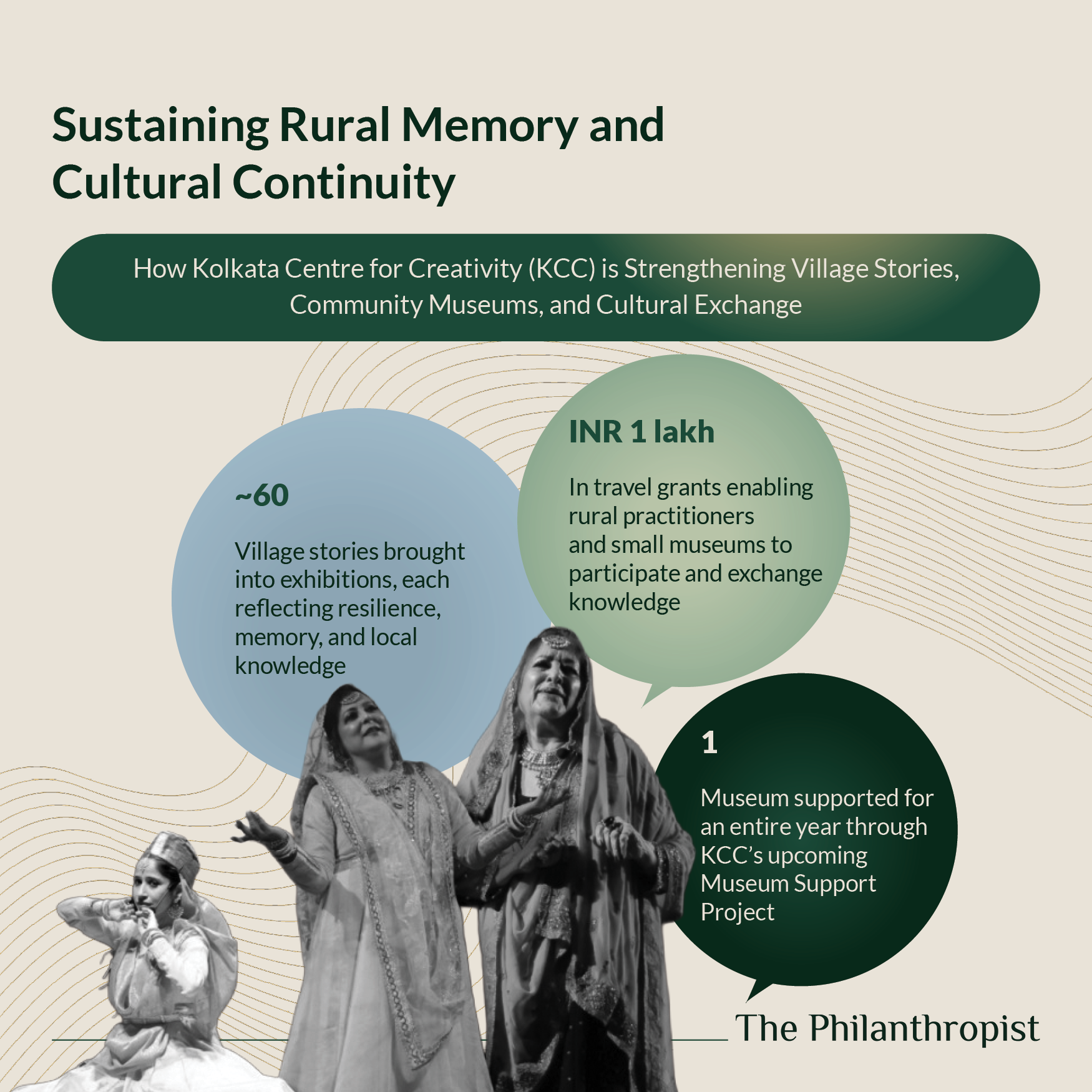
Through village narratives and museum support, KCC is keeping rural memory and cultural continuity alive
Building an Institution, Slowly and With Care
If you enter KCC today, you might encounter a school group sprawled on the floor during a workshop, a film screening, a festival buzzing with engaging visitors, or a solo artist hunched over an experimental installation. None of this existed six years ago. Richa still remembers the early days: “Ten people would show up in a month. But they mattered. And we learned from each one.” Over time, footfalls grew, through listening to audiences, understanding what they needed, experimenting without fear of failure, and striking the delicate balance between accessibility and artistic integrity.
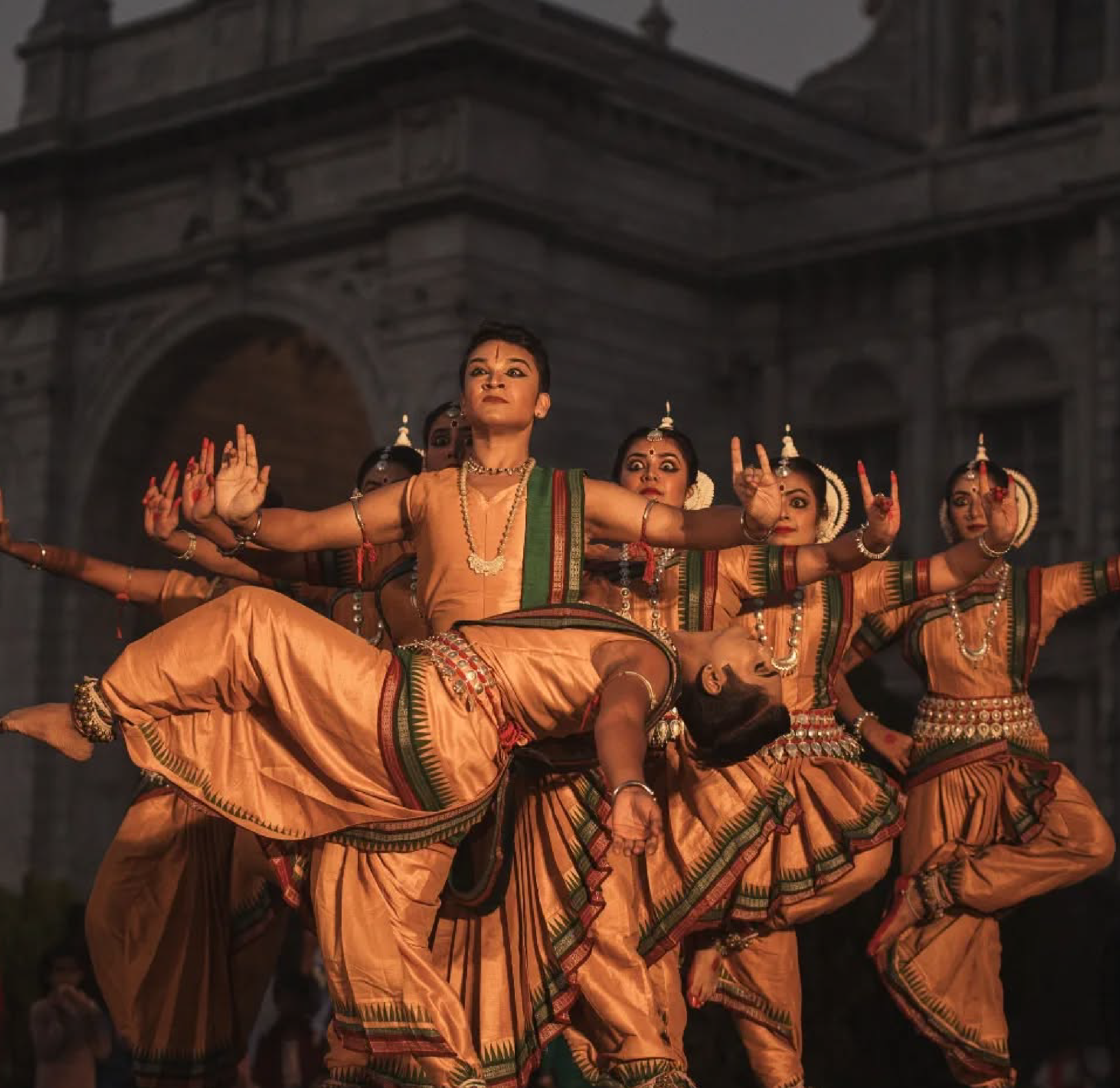
KCC’s programs collectively articulate a clear philanthropic philosophy: that art plays a formative role in how people learn, connect, and imagine their futures. UTSAV, hosted every year at the lawns of Victoria Memorial Hall, offers a platform to young emerging artists across dance, music, and elocution, selected through an All-India Open Call. Learn Togetherness features comprehensive programing to celebrate Pride through art and cultural reflections of artists and performers from the LGBTQIA+ community and its allies in India. Throughout the year, KCC hosts a vibrant range of workshops and learning initiatives that encourage skill-building, dialogue, and community engagement across age groups and disciplines. As these initiatives evolved, participation deepened. Students returned, artists sustained their engagement, and the city began to recognize KCC as a shared cultural space. The Emami Art Experimental Film Festival emerged from the same ethos. “If you want to build culture, you have to build community first. Art doesn’t thrive in isolation, and neither do artists.”
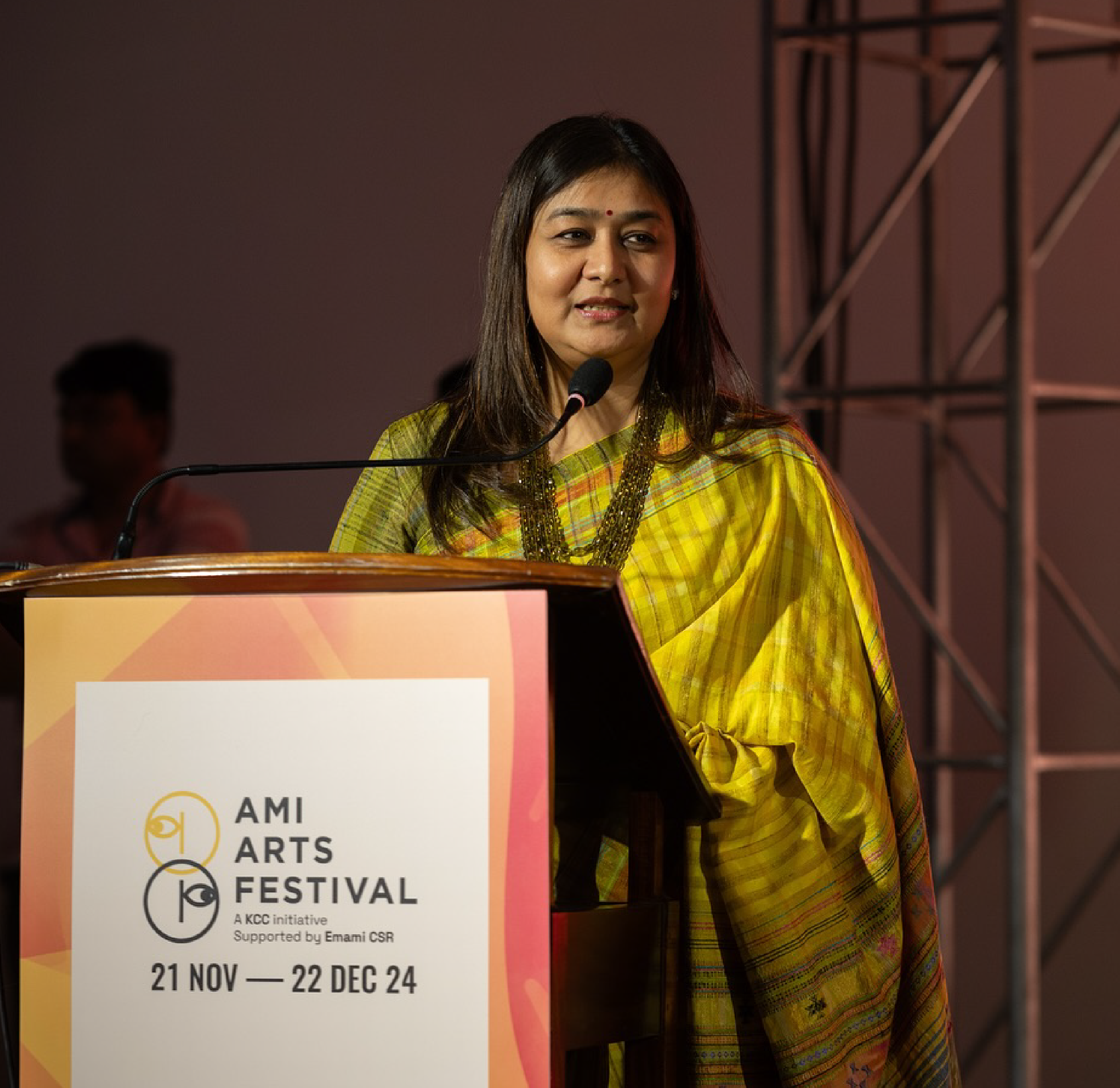
What began as cultural programing gradually took on the contours of philanthropy. At KCC, exhibitions and festivals are entry points, but the deeper work lies in building long-term infrastructure. Vasudhaiva Kutumbakam, KCC’s flagship annual conference, is rooted in the belief that “the world is one family.” It brings together artists, designers, thinkers, and change-makers to build alliances and imagine solutions that uplift communities and protect our shared future. Karigari recognizes the rich and diverse traditions of Indian craftsmanship, hosting award-winning indigenous artisans from across the country. KCC curates a range of flagship festivals and cultural initiatives that highlight regional traditions, artistic excellence, and community engagement. While Baithakkhana honors Bengali stalwarts and Bengali culture across literature, theater, music, and film, Ramjhol presents an immersive engagement with Rajasthan’s traditions, artistry, and hospitality through a vibrant spectrum of events, and AMI Arts Festival marks the most expansive celebration of the arts, with a spectacular line-up of events across theater, music, workshops, talks, and more, unfolding over a month. Several DEAI initiatives have also been designed to move intentionally towards inclusion and access, ensuring that marginalized voices and differently abled individuals can remain central to how culture is imagined and experienced.
This commitment extends to stewardship as well as creation. Through its Conservation Lab, KCC has restored thousands of artefacts, safeguarding material histories that might otherwise be lost. The Online Museum Studies Certificate trains future custodians of culture, recognizing that institutions endure only when people are equipped to care for them. Throughout the year, a series of talks and panel discussions opened up new avenues of thought and exchange. Spanning literature, cinema, politics, art, and social issues, these sessions with academics and eminent experts such as Gopalkrishna Gandhi, Yogendra Yadav, Anurag Kashyap, Sathya Saran, Pinaki De, and others, have fostered meaningful dialogue and fresh perspectives.
Together, these programs are a living demonstration of what inclusive cultural ecosystems can offer: confidence, community, and creative possibility. What strengthens this ecosystem further is the team’s rigorous study of audience behavior. They pay attention to what sparks delight, what creates hesitation, and which experiences encourage return visits. This attentiveness—almost ethnographic—helps KCC strike a balance between rigor and accessibility, proving that high-quality cultural work can be both demanding and deeply welcoming.
In every initiative, KCC mirrors its founding belief: art thrives when knowledge deepens, disciplines intersect, and learning becomes a shared, ongoing act. “We learn from everywhere. But ultimately the work must reflect your own vision, your own principle.”
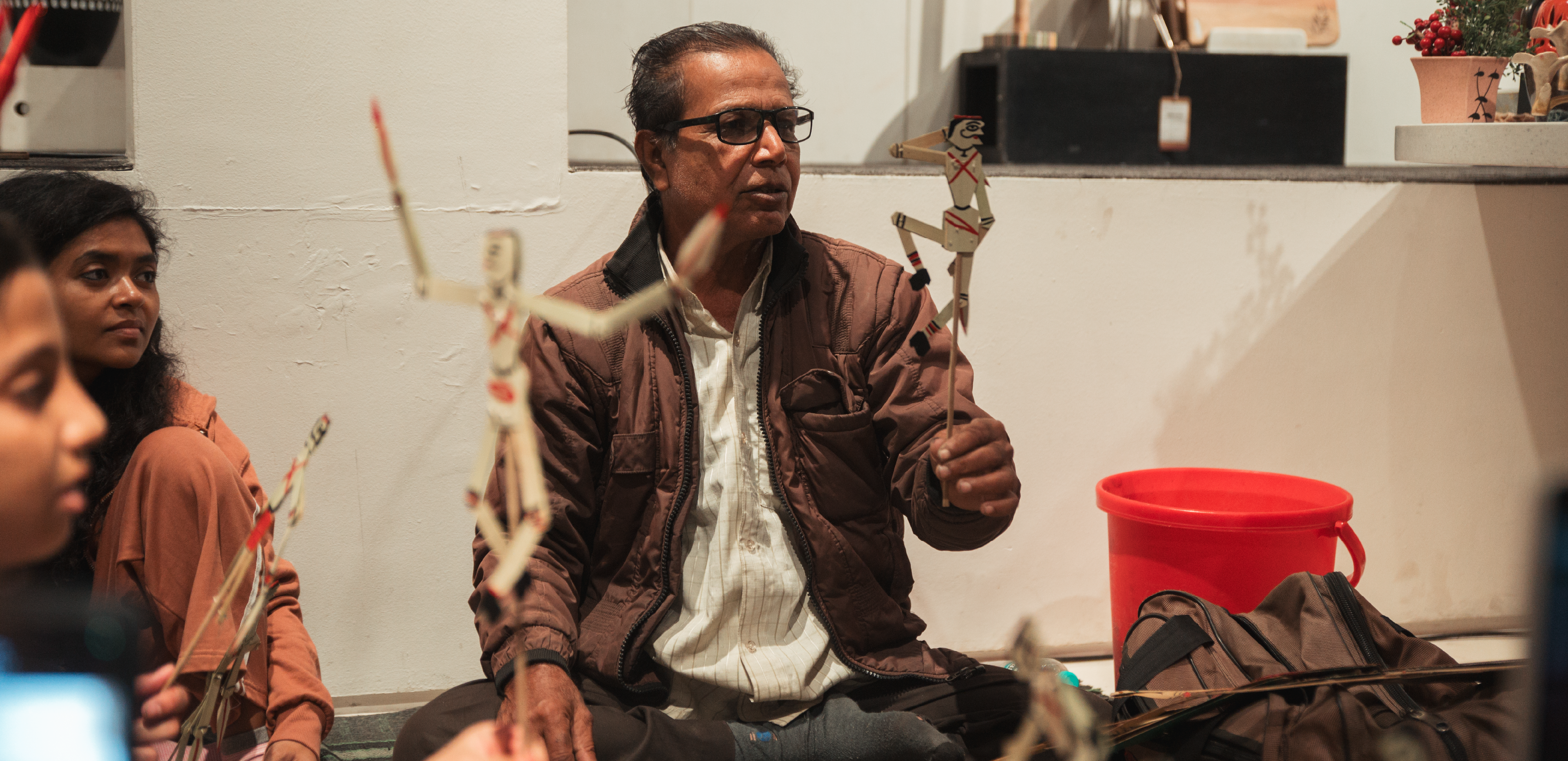
A moment at KCC with an artisan showing his puppetry skills
Building Cultural Futures: A Vision for India @ 2047
When Richa speaks about the future of KCC and Emami Art, she resists the idea of fixed milestones or definitive timelines. The work she is drawn to, she often reflects, is work that outlives its makers. For her, what matters is not predicting 2047 with precision, but committing to a direction expansive enough to hold ambition, patience, and possibility at once.
At the center of this vision lies education and knowledge-building. Richa believes that a knowledge-based cultural ecosystem builds confidence among viewers, practitioners, and institutions alike. It is also what allows culture to move from the margins into everyday life: into classrooms and neighborhoods, civic spaces and shared conversations that shape how people understand themselves and one another. Alongside this sits a second, equally deliberate choice: collaboration. KCC and Emami Art have chosen to grow with others rather than apart from them. For Richa, collaboration is the discipline of building together, learning across institutions, practices, and geographies, and strengthening cultural work through shared ownership.
This approach is grounded in a philosophy of mindful philanthropy. Every intervention, she argues, must begin with a clear understanding of impact—who it serves, where it lands, and why it matters. Cultural philanthropy cannot be impulsive or performative; it demands the same rigor, reflection, and accountability as any long-term commitment. The goal cannot remain limited to doing good, but must ensure the work is meaningful, durable, and held by the communities it seeks to serve.
Richa often points to small, thoughtful initiatives as markers of the future she hopes to see. She speaks fondly of her daughter Vidula’s project, Piece by Piece, which is focused on repurposing textile waste into blankets made by local artisans. Growing in scale, the initiative has brought together craft, design, environmental responsibility, and livelihoods, illustrating how culture responds to contemporary challenges without losing its human core.
Ultimately, Richa’s vision is to recognize that culture, like democracy, is sustained through participation, learning, and care. And to accept that the most meaningful work is often work whose fullest impact will be felt long after our own time.


YOU MAY ALSO LIKE
_1028133513.png)
Read more

Read more