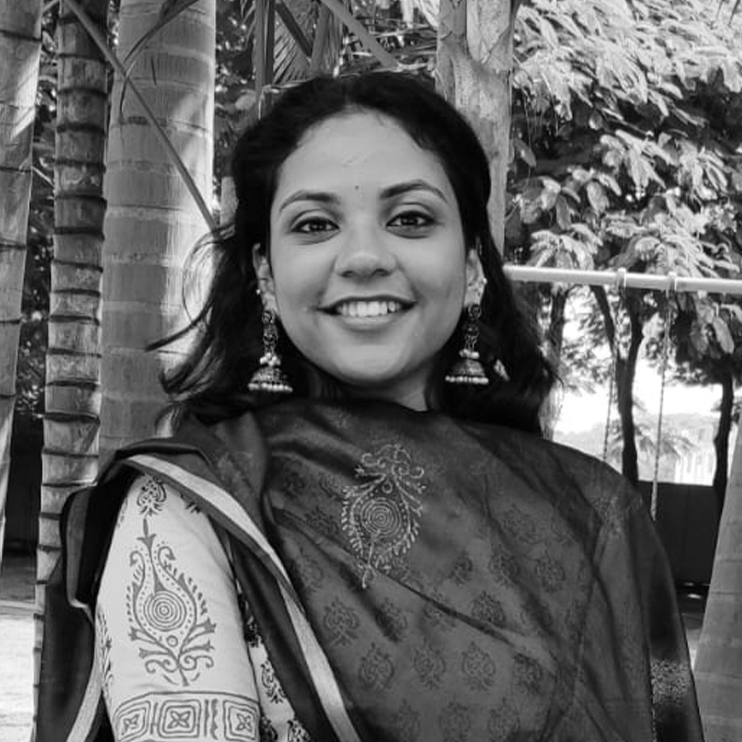
Turning Setbacks into Comebacks: Nitasha Thapar’s Mission to Make Learning Accessible for Women 

In India, where 40% of girls between fifteen and eighteen are already out of school, the pandemic threatened to erase in months what took decades to build. UNESCO estimates that every year, 12 million girls are at risk of dropping out, as young as at the age of fifteen. Behind those numbers are millions of interrupted lives, folded too early into the obligations of adulthood: child marriage, household chores, wage labor. The pandemic threatened to worsen an already fragile pipeline. Years of incremental progress could be erased in months. 

This is the terrain on which philanthropy must choose its courage. 

To look at numbers like these and not flinch, not default to safer, smaller interventions, requires a particular kind of resolve. It requires anyone committed to addressing the challenge, to first acknowledge that it is not an “education issue” alone. It is the dense intersection of poverty, patriarchy, aspiration, safety, and social norms. 

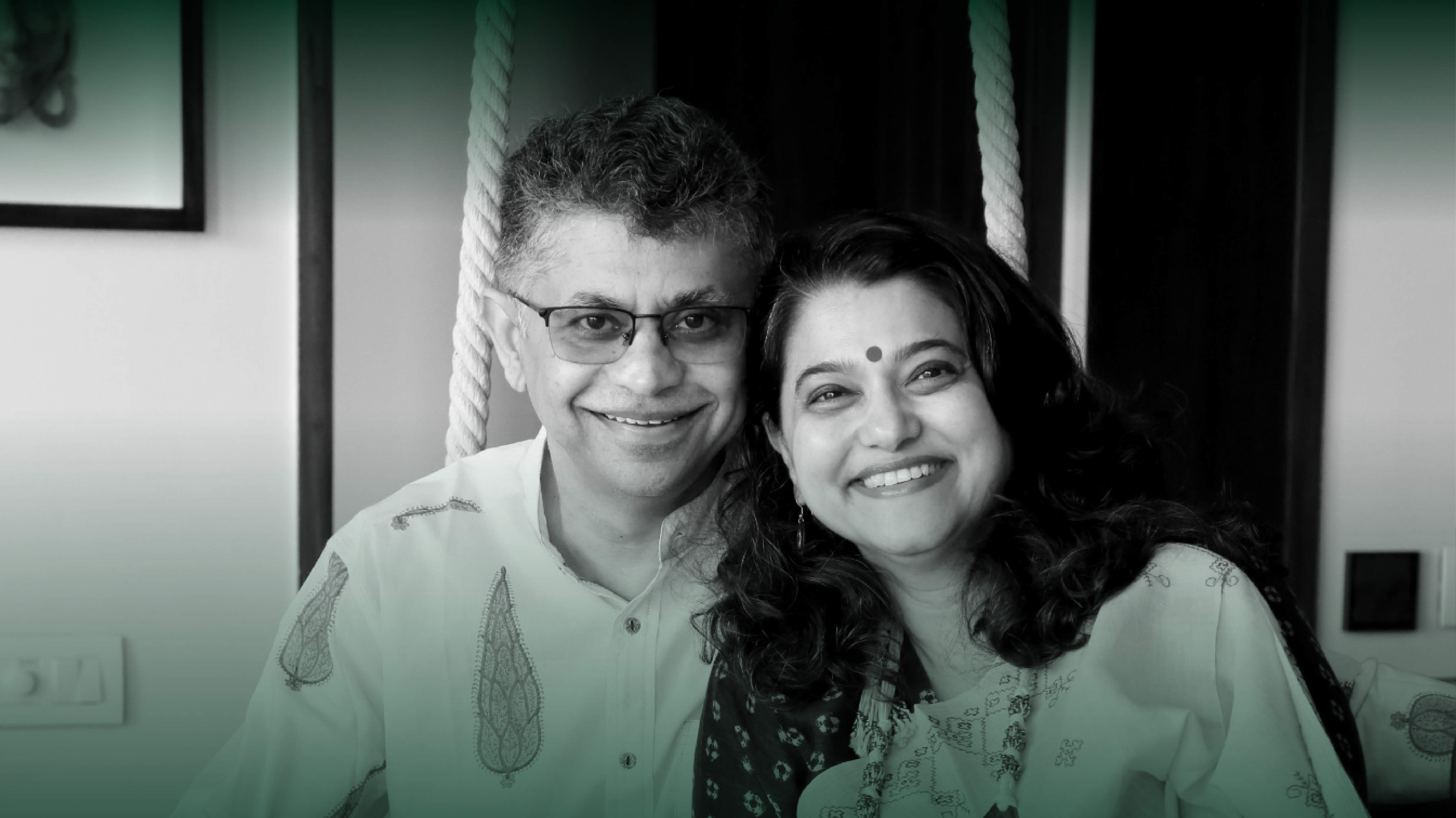
For Nitasha Thapar, her journey into philanthropy and the work of the Kashvi Trust, reflects a deeply personal reckoning with these numbers, and a refusal to accept that where a girl is born should determine how small her life must be. Thus, open closer inspection, what stands out in Kashvi Trust’s approach and impact so far, is the what, and the how. Nitasha started the organization in Jharkhand, and she shares about the choice: “Childhood here often ends abruptly. Forty-one percent of girls marry before eighteen. Seasonal migration pulls families apart. Trafficking networks exploit economic hardship, pushing young women into distant domestic work. In this context, asking families to let their daughters return to learning meant more than offering education.”   

It meant challenging fears and reimagining what safety and possibility could look like. It is therefore inspiring to see how Kashvi's work has evolved with this recognition. “Keeping girls in school is as much about community trust as it is about classrooms; as much about negotiating with families as it is about building infrastructure; as much about safety, mentorship, and aspiration as it is about textbooks.” 


The Questions That Built Kashvi: Nitasha Thapar’s Journey 


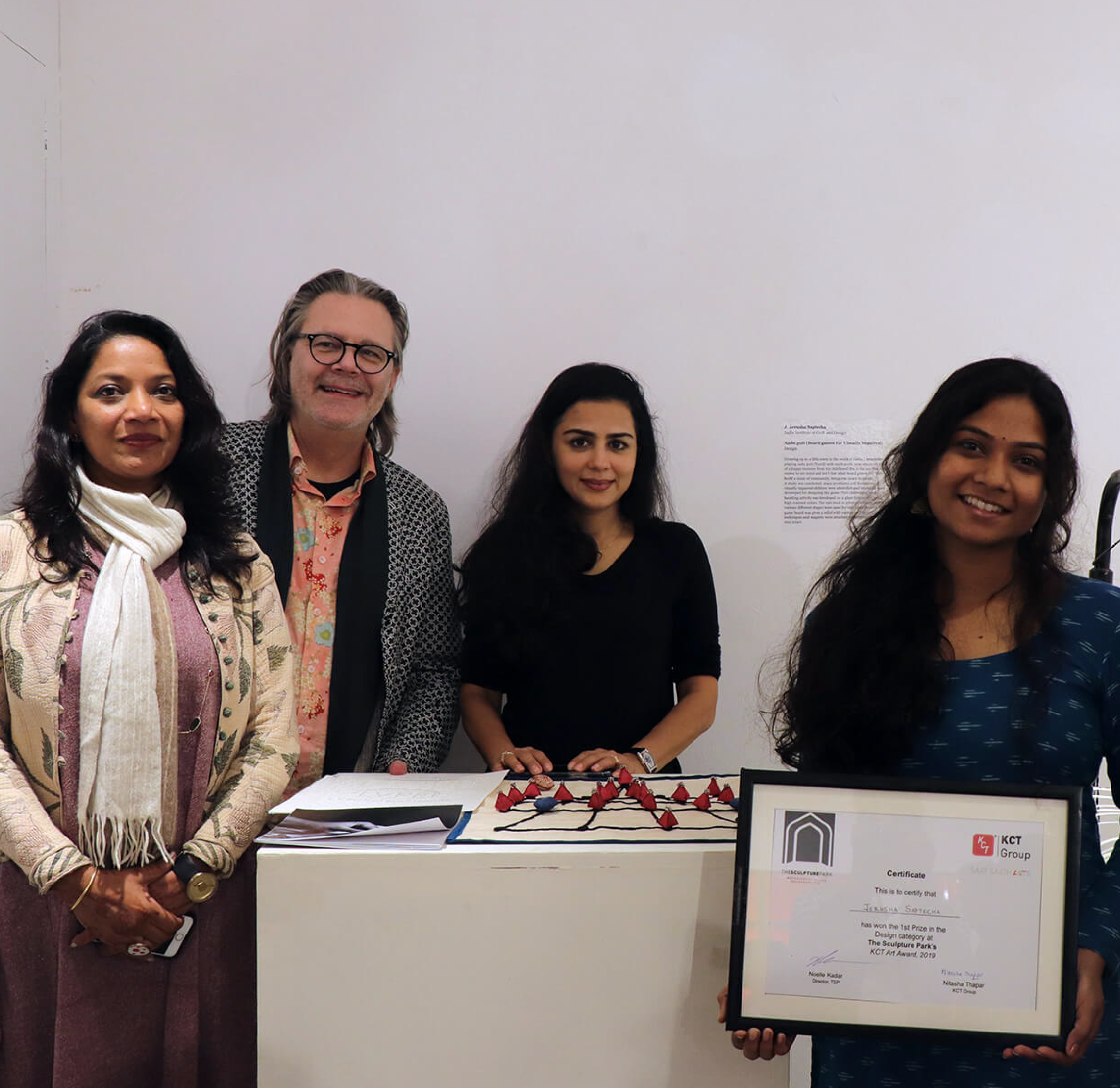
Nitasha’s path into philanthropy began with curiosity and a designer’s instinct to notice when things did not fit. Her first encounter with rural India came through pro bono work at the Crafts Museum in Delhi, where she met women artisans, whose talent remained pinned to the margins of the economy. Their struggles were systemic, but the solutions around them often failed to recognize their lived realities. “Here was a whole sector brimming with talent yet deeply underserved,” she recalls. This experience planted the question that would shape her life’s work. How could design thinking and philanthropy honor dignity rather than just check efficiency boxes? 

When she began working with her family’s CSR trust, Nitasha realized early on that even thoughtful programs could fail when they overlooked the rhythm of women’s lives. Unsafe routes to school, daily survival shaped by care work, wage labour, social scrutiny, and trust that returned slowly if broken made all the difference. 

Questions guided her learning. Why were girls not returning to school? What did safety mean in villages where men migrated for work? How did women structure their days? Who made decisions and who was allowed to dream? Listening to local volunteers, fieldworkers, and leaders taught her the value of working with communities rather than around them. Solutions had to grow from lived experiences. These insights became the foundation of Kashvi Trust. 

A community woman handcrafting leaf plates—an everyday livelihood practice that reflects local knowledge, resilience, and self-reliance

“The way lives change over time is what fuels us at Kashvi. Every small step a woman takes toward learning, every time she reclaims a choice, reminds us why this work matters.” 
Kashvi Trust’s sustained investment is expanding access to learning and unlocking pathways to opportunity for women and girls

Learning to Build, Learning to Listen 


Many education initiatives in India focus narrowly on literacy without addressing the realities shaping girls’ lives. Kashvi Trust began by meeting women facing early marriage, childcare, financial stress, and restricted mobility. They saw the cost of literacy without agency. Confidence and choice were the foundation upon which learning had to be built. 

The first insights came from a 2017 to 2019 pilot through another organization, revealing the depth of educational discontinuity for adolescent girls and women. The Trust focused on this underserved group. The flagship program began during the COVID-19 pandemic, with operations fully functional in 2021. High dropout rates forced the team to adapt. The original 24-month structure became 18 months to suit mothers and adolescents juggling multiple responsibilities. 

In the first year, the team went door to door, speaking with parents, teachers, and girls to understand barriers. They built credibility with panchayats and gram sabhas and improvised solutions. Zoom classes happened where connectivity allowed, printed worksheets were used when it did not, learning kits were hand-delivered, and phone calls were made just to check if girls were safe. These slow, grounded efforts became the blueprint for Kashvi Trust’s approach. 
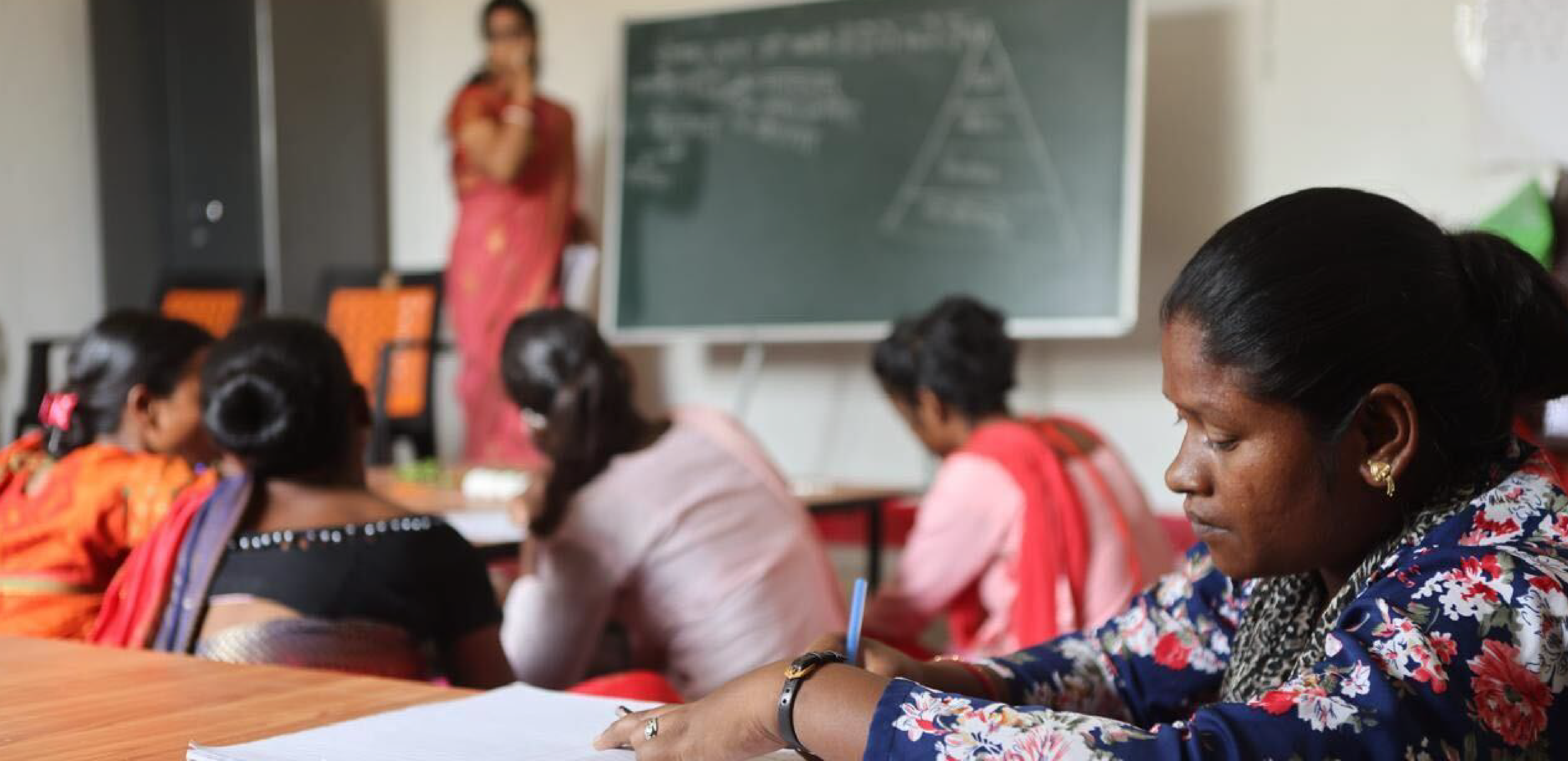
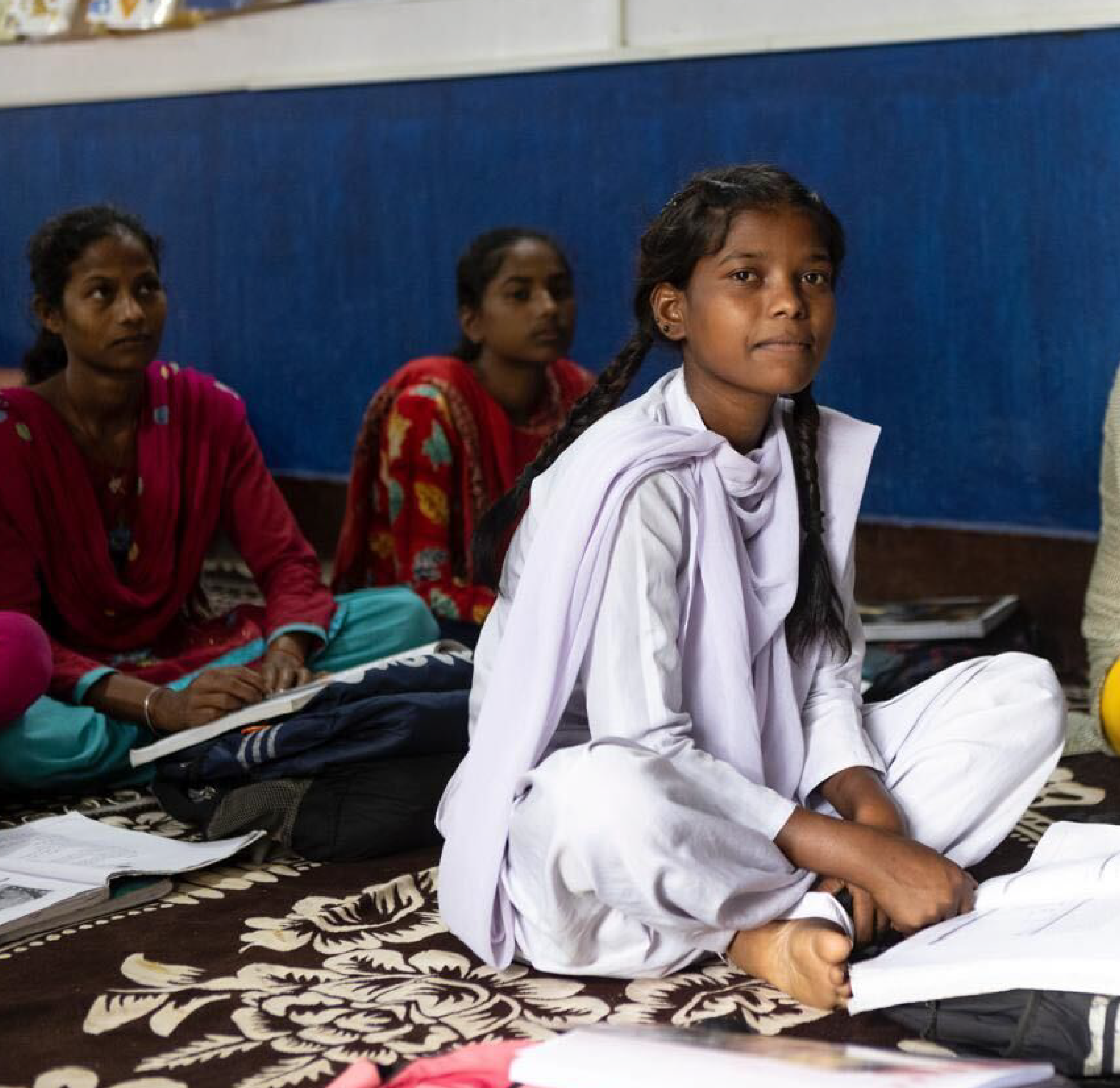
The Kashvi Program expands opportunity, strengthens livelihoods, and enables confident futures for women
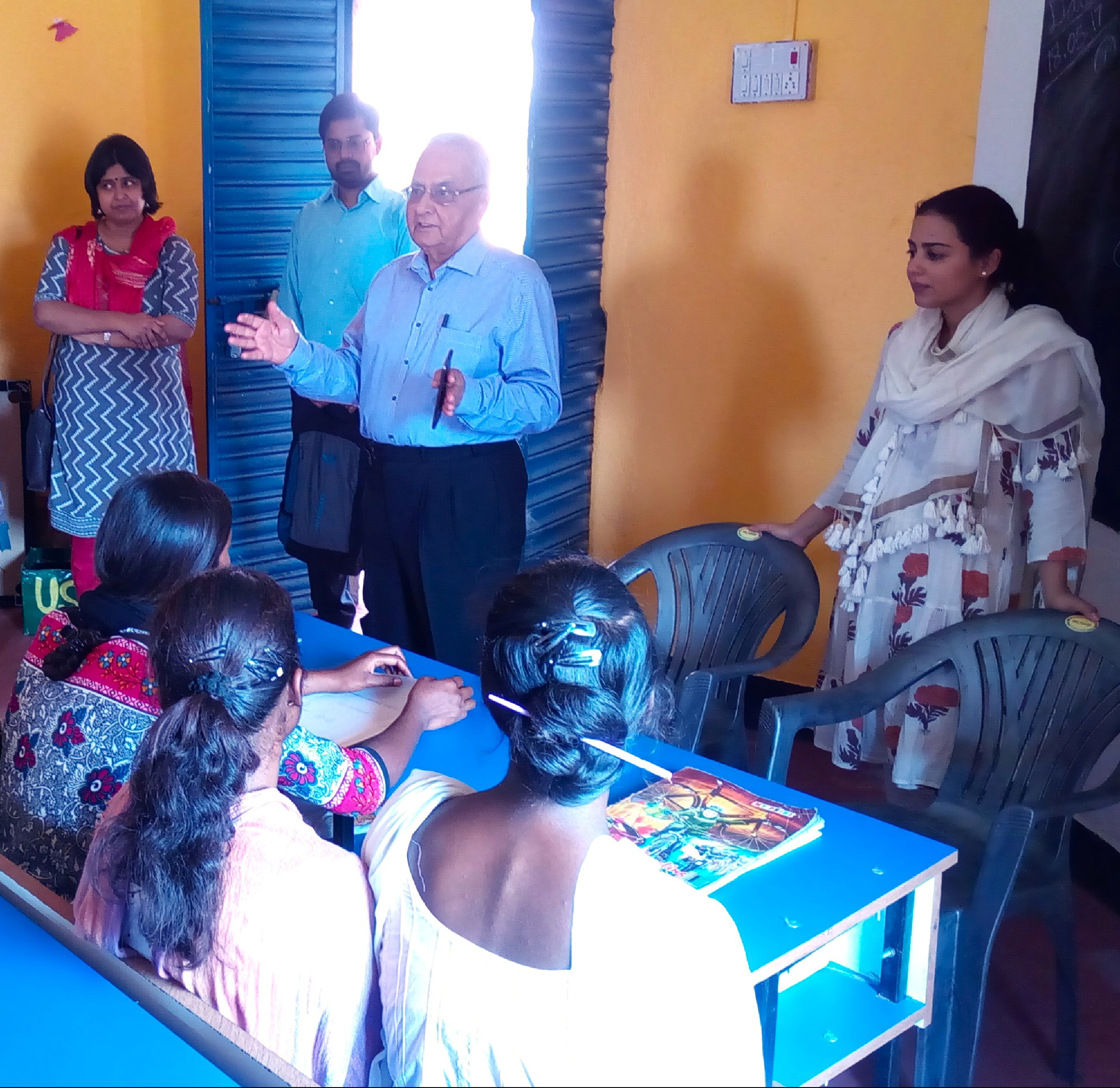
Building Skills, Confidence, and Opportunity

“It started with a simple belief: every woman deserves the chance to begin again, with education, livelihoods, and the agency to shape her future.” Kashvi Trust’s three flagship programs, Manzil, Disha, and Udaan, are interconnected pathways that bring this belief to life. 

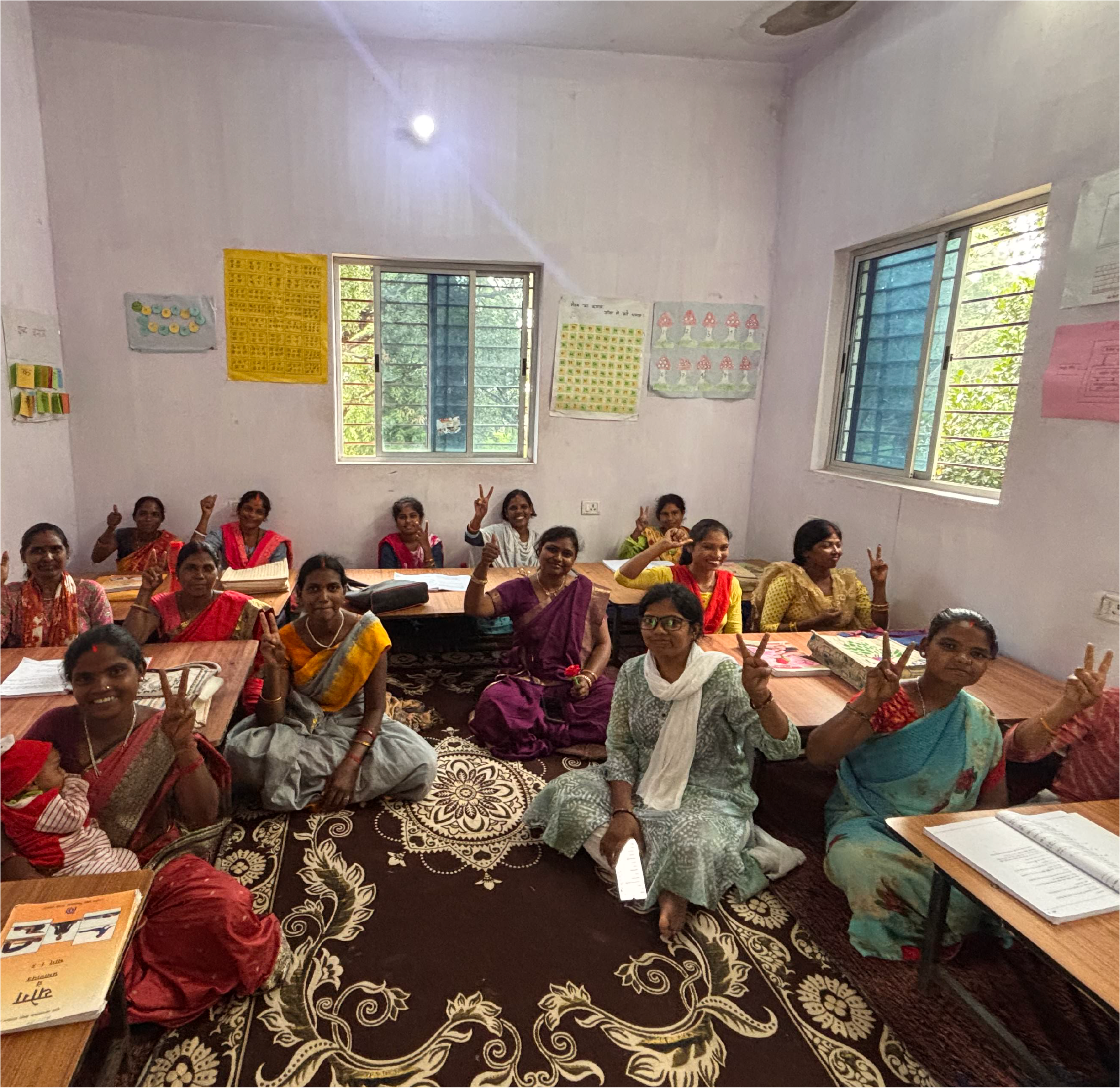
Kashvi Manzil, the alternative education program, welcomes learners who left school years ago. It provides foundational learning and bridges Class 6 to 8 concepts before preparing learners for National Institute of Open Schooling exams. Classes now run for 16 months to suit adolescents and young mothers. Teachers support multiple ages and abilities in a single room. Lessons go beyond memorization, focusing on understanding and application, and subjects are chosen for practical income and participation opportunities. 

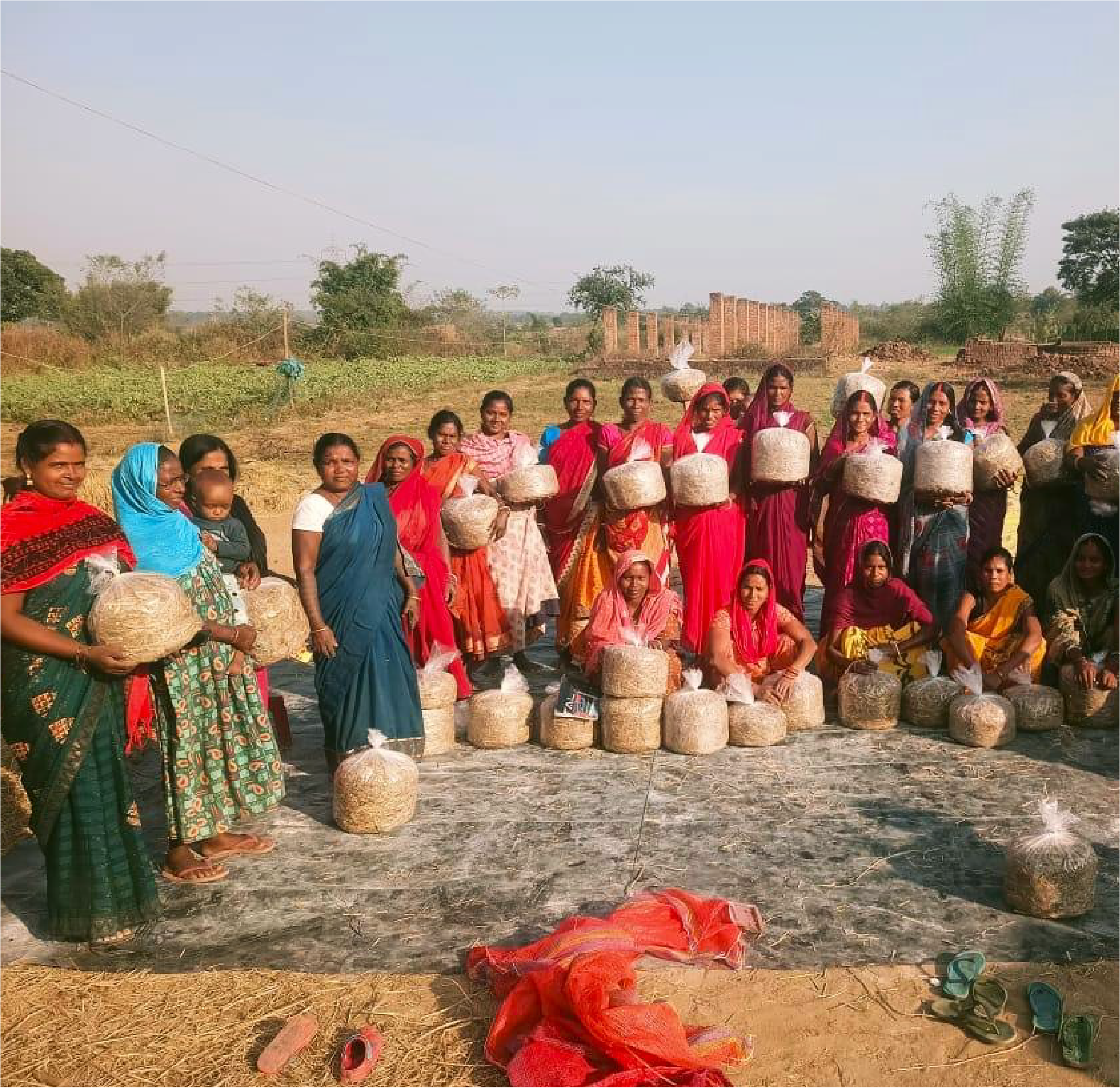
Manzil’s impact is seen in learners like one woman who once relied on others to read personal bank messages. She now reads her own messages, protects her privacy, and navigates daily life with confidence. Kashvi Disha extends agency into livelihoods. Through partnerships and training programs, it equips women with skills such as poultry rearing, mushroom cultivation, and traditional crafts, with links to local markets. This pathway is designed to work within mobility constraints, especially for married women with childcare responsibilities. 

Madhu Kumari’s journey illustrates this impact. Forced to leave school due to illness, she reconnected through Kashvi, completed her Class 10, and now has a job that shifts her family’s trajectory. 

Threaded through both programs is Kashvi Udaan, the social-emotional and life-skills program. Udaan builds confidence, voice, and leadership, helping girls navigate public spaces, understand rights, and imagine futures previously denied. It turns literacy into agency. Stories like Asha’s, a mother of five who became a community leader and enrolled in college, or the 73-year-old who returned to learning after fifty years, show how education at Kashvi Trust transforms lives. “You realize you are holding a thread that keeps a girl tethered to the idea that her life can be different,” Nitasha reflects. 

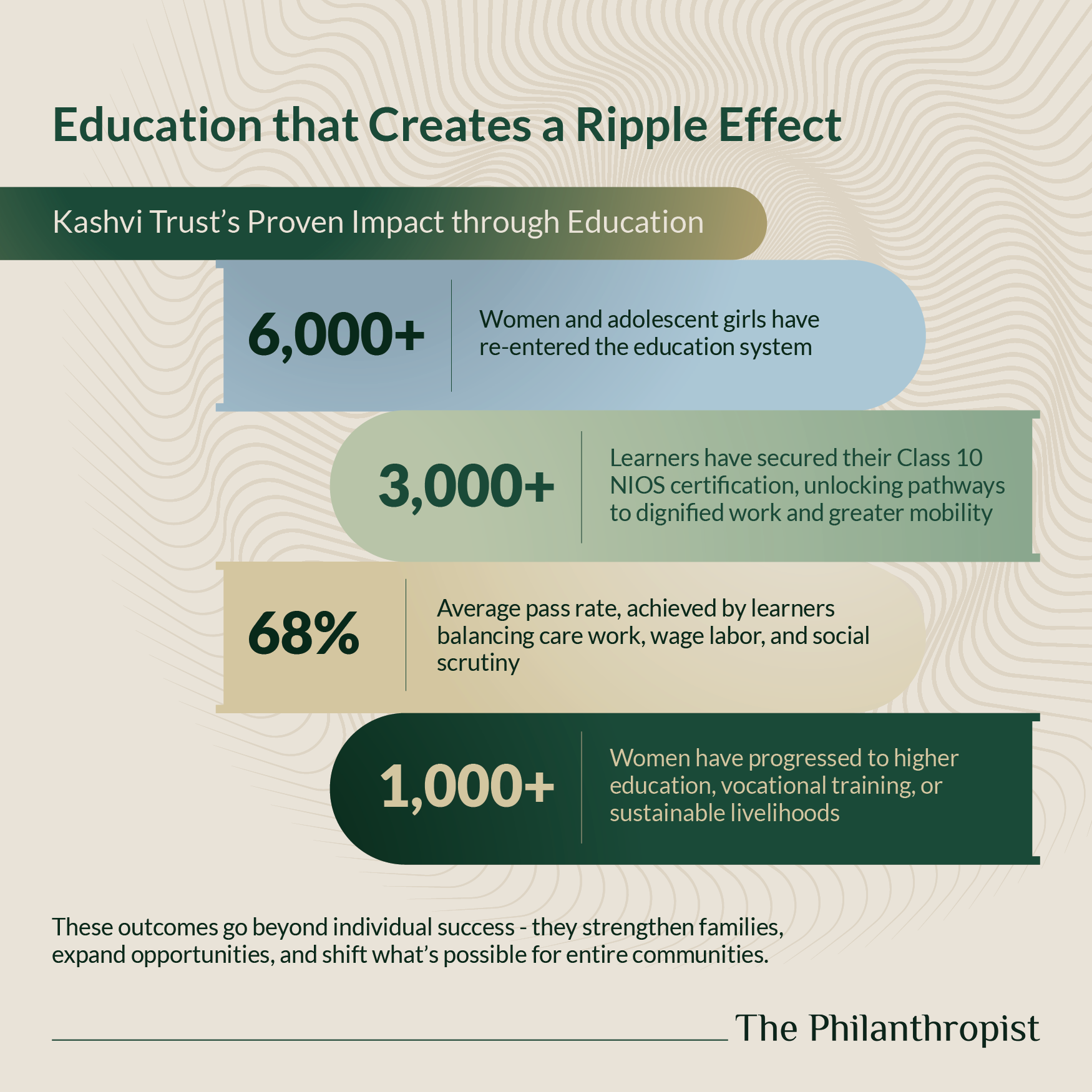
In just a few years, Kashvi Trust has built an undeniable ripple of change: over 6,000 women and adolescent girls have re-entered the education system through its programs; more than 3,000 have secured their Class 10 NIOS certification helping women and young girls find access to dignified work and mobility within their communities. With an average pass rate of 68%, these learning results are markers of resilience for Kashvi Trust’s learners who study between care work, wage labor, and social scrutiny. And for the 1,000+ women who have since moved into further studies, vocational training, or livelihoods, the impact goes beyond individual advancement. It reshapes what becomes possible within their communities.

Philanthropy as Partnership: With Communities, Against Challenges 

Kashvi Trust works to make education accessible across geographies and build employability within communities. Transformation must reach thousands, not dozens, to shift a region’s trajectory. The Trust stays grounded by listening, adapting, and following the rhythm of women’s lives. Its ethos of “turning setbacks into comebacks” capture this approach. 

As India moves toward 2047, the sector faces key questions. Will programs continue being built around assumptions or around what women say they need? Kashvi Trust shows that when philanthropy listens, partners with communities, and stays the course, structural gaps begin to close, and the possibility of an India where every girl can learn, earn, and choose becomes real. 

Throughout her journey, Nitasha has positioned herself as an enabler of local leadership, of grassroots' wisdom, of girls’ own dreams. She is committed to investing in ecosystems that can engage with the problem of girls’ education in India with courage, imagination and a belief that even when systems fail girls, we do not have to. 

Sources:

YOU MAY ALSO LIKE

Arundhati Misra

Creative Director

Arundhati Misra is a dynamic communications leader with deep expertise in storytelling, strategic outreach, and creative direction in the development sector. As Manager at Dasra, she plays a pivotal role in shaping and amplifying the narrative of GivingPi, the world’s largest family philanthropy network. She also serves as the Creative Director of The Philanthropist, overseeing all aspects of the magazine’s creative vision. Beyond this, she leads the creative and multimedia strategy for both The Philanthropist and GivingPi, working closely with a network of designers and agency partners to craft compelling narratives that drive impact.

Arundhati holds a Master’s degree in Economic History from the London School of Economics and Political Science, bringing a unique analytical perspective to her work in communications. With a passion for elevating powerful stories and shaping influential narratives, she is committed to leveraging creativity and strategic communications to inspire action and drive meaningful change.

Shibani Gosain

Executive Director

Shibani Gosain leads narrative building, thought leadership, and communications at Dasra and GivingPi, working at the intersection of philanthropy, equity, and storytelling. She is passionate about using strategic communication as a tool to drive social change and shift mindsets. Shibani also serves as Executive Director of The Philanthropist—a first-of-its-kind digital magazine that captures insights, voices, and stories from India’s evolving family giving ecosystem. In her role, she works closely with philanthropists, and sector leaders to craft compelling narratives that inspire generosity, foster trust, and shape the discourse around giving in India.

Whether it’s building sector campaigns, curating thought leadership, or anchoring convenings, Shibani brings creativity, empathy, and strategic clarity to her work.

With a background in communications, media and the development sector, she brings a unique blend of storytelling, systems thinking, and community-centered practice to everything she does. Her work reflects a deep commitment to elevating voices, building trust, and catalyzing long-term social change.

Prachi Pal

Curator & Editor-in-Chief

Prachi Pal anchors research and thought leadership on philanthropy at Dasra, shaping knowledge at the intersection of giving and social change in India. Her work weaves together research, storytelling, and strategic content to build narratives that surface emerging trends, elevate practitioner voices, and inspire more intentional philanthropy. Through reports, articles, podcasts, and convenings, she curates knowledge that is both analytically rigorous and relevant to practitioners and funders alike.

As the Curator and Editor-in-Chief of The Philanthropist, Prachi conceptualizes each edition through a distinct thematic lens. She mentors writers, combines primary and secondary insights, and unpacks funder journeys to shape a magazine that is reflective, bold, and brings to life the stories that must be told about philanthropy.

Prachi holds a Master’s degree in Development Studies from the Institute of Development Studies, University of Sussex, where she trained in participatory action research. She is committed to curating and creating knowledge that informs giving practices and strengthens philanthropy in India.

Isha Maniar

Editorial Team

Isha Maniar works at the intersection of narrative building, editorial strategy, and philanthropy. As a Manager, she currently anchors narrative building and thought leadership at GivingPi and serves as a member of the editorial team of The Philanthropist. In this role, she works closely with philanthropists, practitioners, and sector leaders to shape stories that deepen understanding of giving, and the decision-making and long-term commitment required to do it right.

Her professional background spans dispute resolution law, book publishing, and media - all of which, taken together, have been instrumental in shaping her ability to build deeply researched, compelling narratives. Across formats and sectors, her work is driven by a belief in storytelling that respects both context and consequence.

Yash Thakoor

Editorial Team

Yash Thakoor (he/him) is an experienced researcher and storyteller in the development sector. With Master’s degrees in Public Policy, Political Science, and Defence & Strategic Studies, Yash brings a multidisciplinary perspective to his work. Before joining Dasra, he transitioned from a career in entertainment media to focus on development research, collaborating with organizations such as Aangan Trust, Sambodhi Research and Communications, UNICEF, and the Asian Development Bank, to build impact-driven stories and narratives. At Dasra, as part of the Research and Insights team, Yash develops advisory research on pressing development challenges, and shaping philanthropic engagement towards India’s evolving social impact landscape.

Nandita Sanjeevi

Design Lead

Nandita is a visual communication designer with extensive experience working at the intersection of art, design, and social communication. Her practice centres on graphic design and strategic creative direction, partnering with organizations in the development sector to drive transformative change through cohesive visual systems.

Her work ranges from designing for cultural events to translating complex healthcare, and philanthropic data into clear, accessible communication through illustration, publication design, and data visualisation. She strongly believes that art and design should be inclusive, culturally resonant, and capable of shaping understanding and influencing behaviour. Her work supports public-facing communication and knowledge dissemination for funders, philanthropists, policymakers, public health professionals, and practitioners across the social sector.