The Long Economics of Craft: Inside the Ekibeki Model
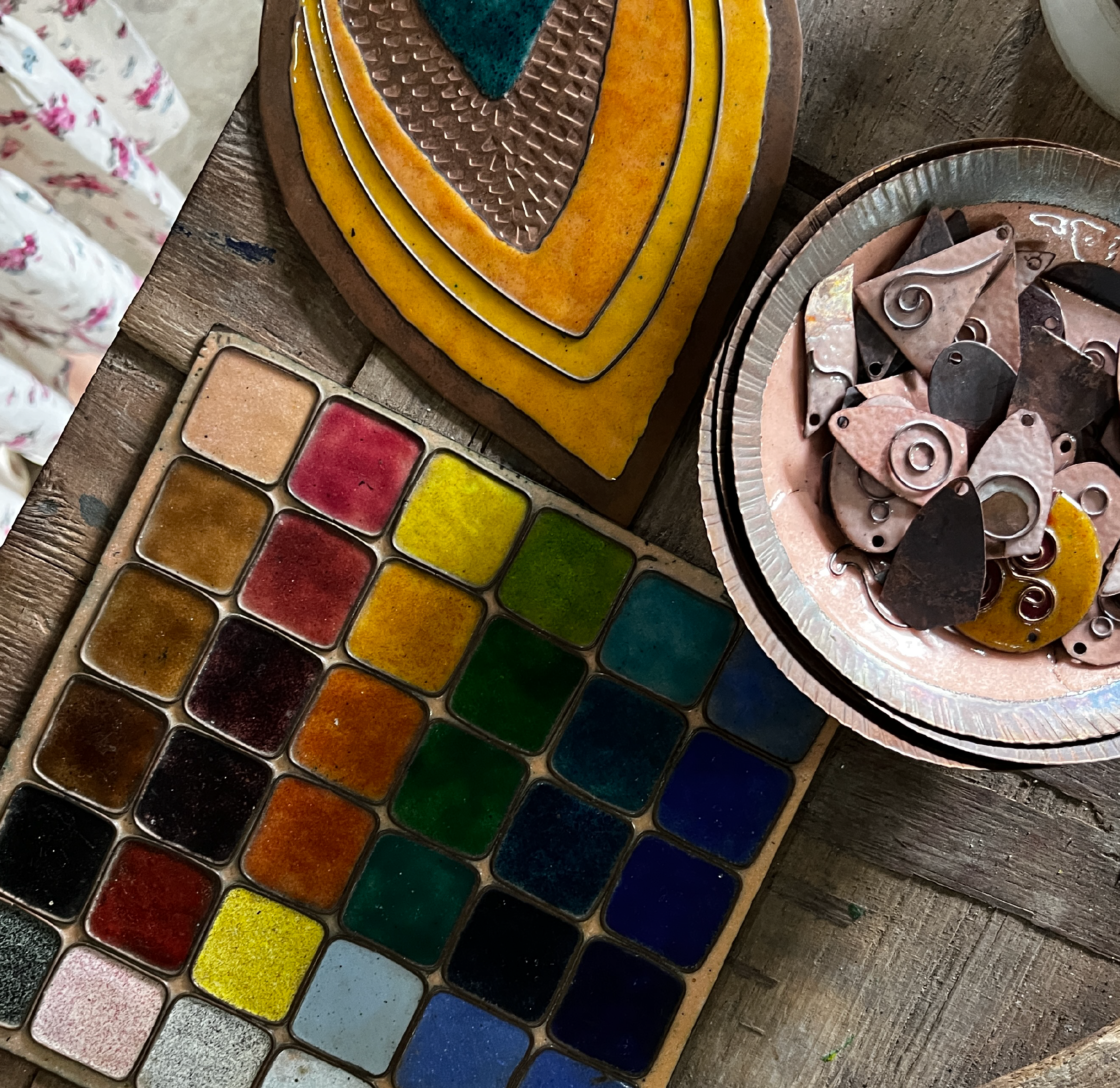
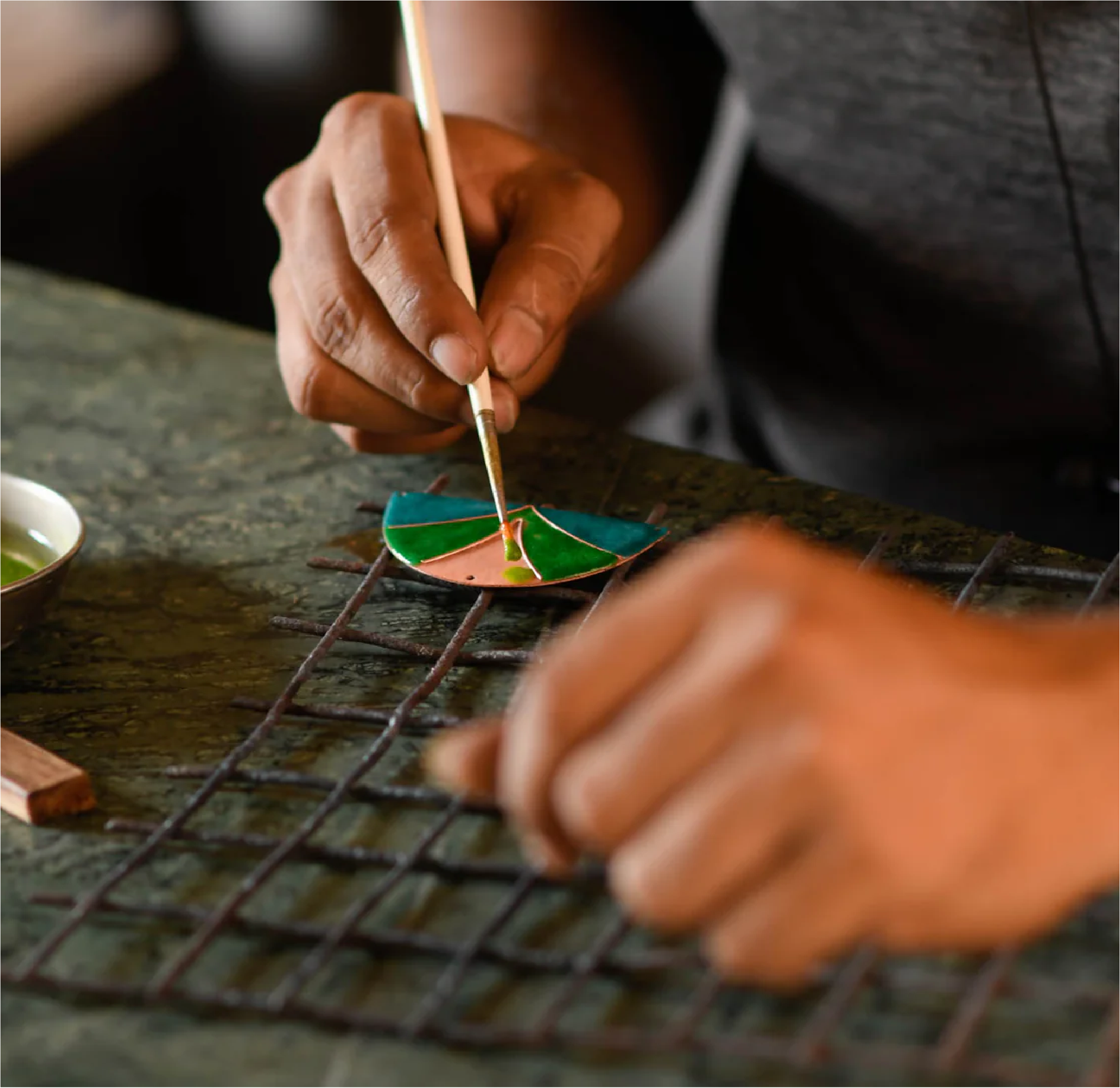
At the Google campus in Bengaluru, a Warli mural, typically reserved to depict rural scenes of harvests and festivals, tells the origin story of the technology giant in the city. In Mumbai, on the first floor of the Starbucks at the Jio World Drive, is a wall featuring a copper-enameled mermaid, created by a craft cluster in Alibaug that, left to its own devices, would have produced puja thalis instead. In both instances, the crafts used have been practiced by artisan communities for centuries, but in their application, they are distinctly contemporary. It’s precisely this application that reflects Ekibeki’s core tenet: to reinterpret what traditional Indian crafts can become when they are employed in new contexts.
The stakes for such reinterpretation are decidedly high. India is home to over 3,000 distinct craft traditions, employing more than seven million artisans, largely from marginalized communities, and over half of whom are women. And still, the country accounts for less than two per cent of the global handicrafts market. More than 200 Indian crafts are already classified as endangered, although Ekibeki’s research estimates this number to be around 1200, while several others are slipping into oblivion, crowded out by machine-made dupes that now make up an estimated 60 to 70 per cent of what is sold domestically as “handicraft.”
It is within this context of erosion — of livelihoods, of craft traditions, and of markets — that Ekibeki operates as the philanthropic vehicle of two first-generation wealth creators. For Vishpala and Neelesh Hundekari, giving was never about short-term relief or symbolic support, but about choosing a space where capital could build institutions, capabilities, and markets over time, even when the outcomes were slow and difficult to measure. Founded by them in 2018, Ekibeki works at the intersection of craft, design, and livelihoods, backing artisans through long-term engagement aimed at building viable, contemporary markets for their work. Over nearly eight years, Ekibeki has become known for its expertise, rooted in design interventions to revive dying Indian crafts.
The application of traditional crafts at corporate scale is Ekibeki’s work at its simplest—and incidentally, its most reliable revenue stream. For the Hundekaris, this was a conscious philanthropic trade-off: commercial commissions were a way to finance long-term engagement with craft communities without depending entirely on grants or episodic funding. It, however, is only the surface. Behind each commission, there are months — often years — of consistent engagement with craft communities, of trust-building, proximity, and a deliberately patient model of philanthropy that invests long before a product takes shape and remains present long after it’s finished.
This patience is fundamental to Ekibeki’s approach. “It takes me at least two years to build trust within a craft community,” says Vishpala about the process that ultimately gets artisans to adopt new ideas. “Even if and when they know the craft is endangered and they need help, for them to trust somebody it takes at least a couple of years.” Neelesh adds that such skepticism is inevitable, “The world has become so vitiated that even if you genuinely have no motive except the revival of their craft and their livelihood, they find it quite hard to believe.”
The Inception of Ekibeki
Both Vishpala and Neelesh come to philanthropy with no inherited giving templates or settled causes to support. But they both shared a discomfort with transactional charity, and a conviction that if they were to give meaningfully, it would have to be in a way that helped build livelihoods — not dependency. Craft, as a philanthropic focus, is neither mainstream nor does it carry the immediate heft traditionally associated with education, healthcare, or poverty alleviation. Their interest in the sector was entirely personal. Ekibeki, in its current form, was the result of nearly three decades of personal and professional recalibration.
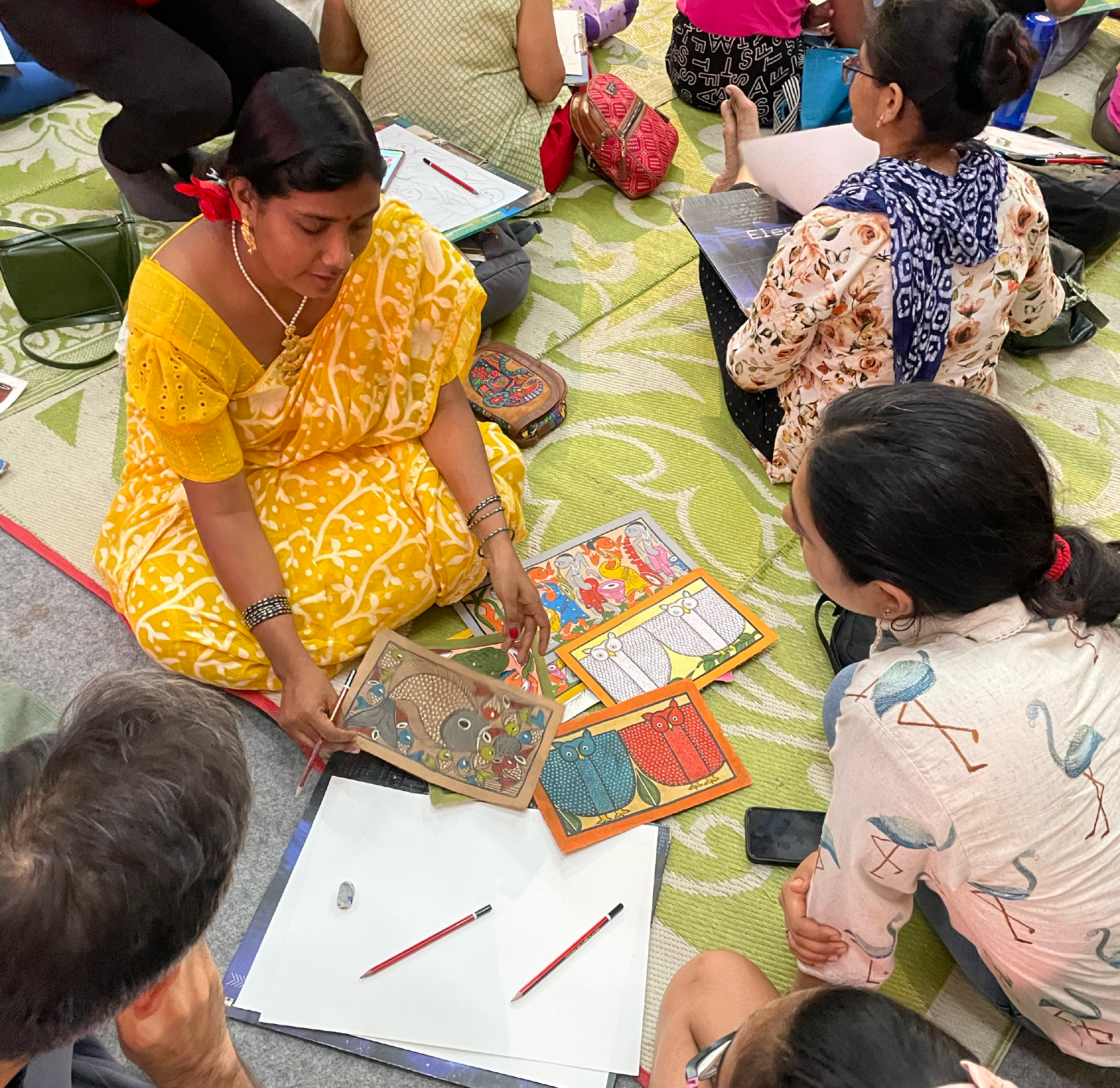
For Neelesh, the desire to work in social impact was always simmering under the surface. He contemplated government service before eventually landing on a career in the corporate sector because that was one way to make an impact. Vishpala’s trajectory, on the other hand, moved through design: NID, architecture, interiors, and Ekibeki as a for-profit partnership focused on corporate gifting. Even then, her commercial projects consistently led her back to crafts and the communities practicing them. During her time as a merchandiser at the Bombay Store, Vishpala witnessed the market realities for craft communities firsthand — how long selling cycles and delayed payments affected artisans, and how small design inputs from her — simple sketches — could dramatically improve product viability for them.
At this stage, the Hundekaris considered the more familiar path of cheque-writing philanthropy — education, healthcare, or one-time grants. Over time, they did support several causes. But they found themselves unconvinced by giving that ended where it began. For Vishpala, this work required a different kind of commitment. “In fact, when the idea first came to us, I wasn’t sure I could pull it off on my own. I tried to work with a few other organizations in the space, but I was disappointed when there was a value mismatch. Neelesh encouraged me over several conversations to do it on my own.” For Neelesh, the philosophy was always, “We’ve always believed that it’s better to teach a person how to fish. Sustainable livelihoods creation can happen only when philanthropic funding is used as a catalyst, not as a crutch. The goal was to build a model where good design met real demand and where money flowed back to artisan, not intermediaries.”
Since its inception, the Hundekaris have ensured that Ekibeki’s organizational philosophy remains at the intersection of craft, livelihoods for those working with them, and a knack for design interventions that are intentionally beyond the ordinary. “Sustainable livelihood can only be created if artisans are creating something which has demand,” says Neelesh. “It was essential to create products that stand out on their own— beautiful, attractive, they appeal to the consumer. The margins are low, so they remain affordable.”
It's this sageness of approach that has now led them to larger commissions for craftspeople — bespoke wedding installations, café backdrops, and corporate art — forming an essential revenue stream. Neelesh describes their roles as intentionally calibrated, “I spend most of my time thinking about structuring the business, getting the economics right, making sure we have the right team and processes. The day-to-day is handled by Vishpala, who is fully and passionately immersed in it.”
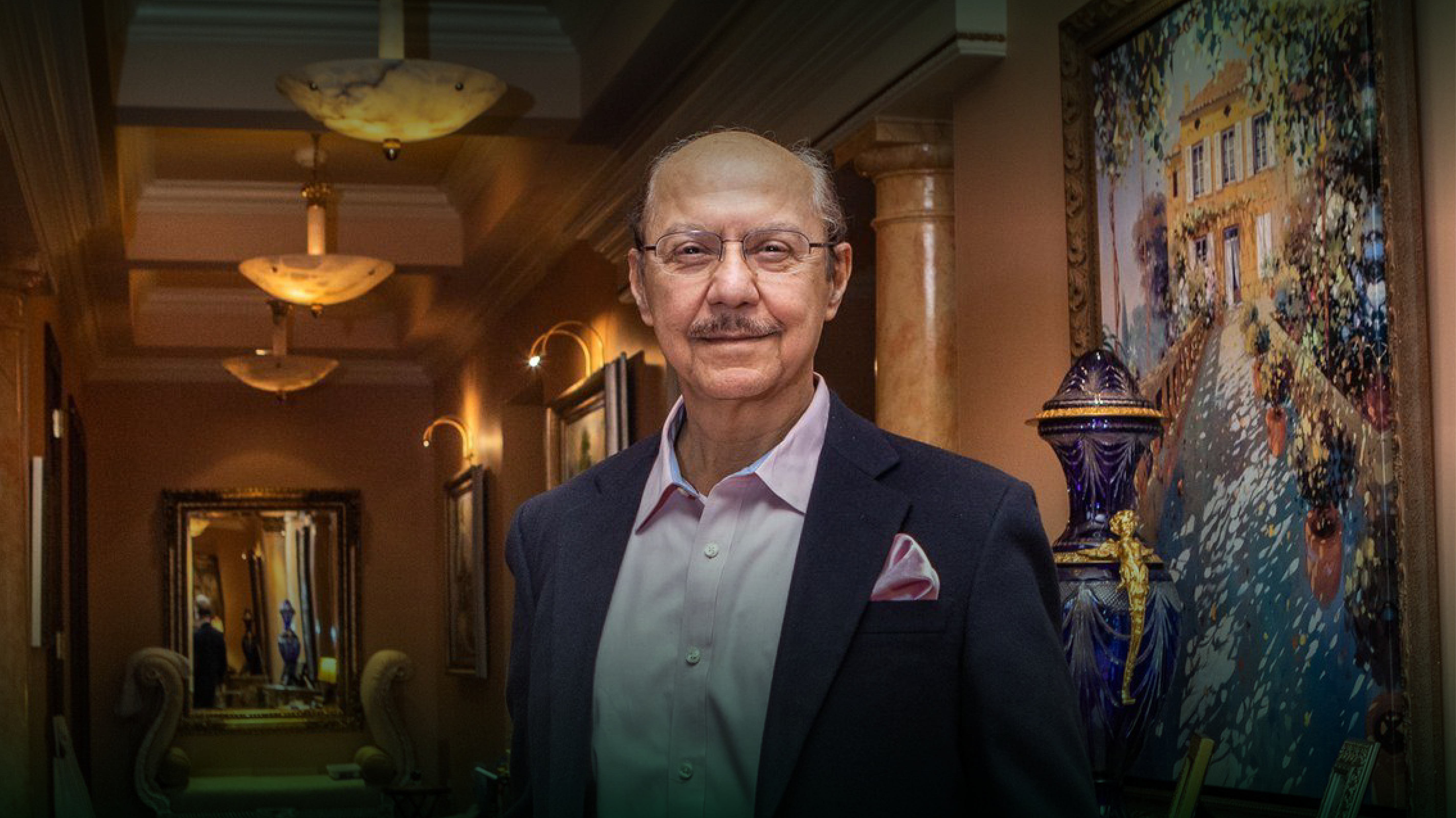
Nilesh Hundekari in conversation on why reviving and restoring art forms matters today
“We believe you don’t give a person a fish - you teach them how to fish.”
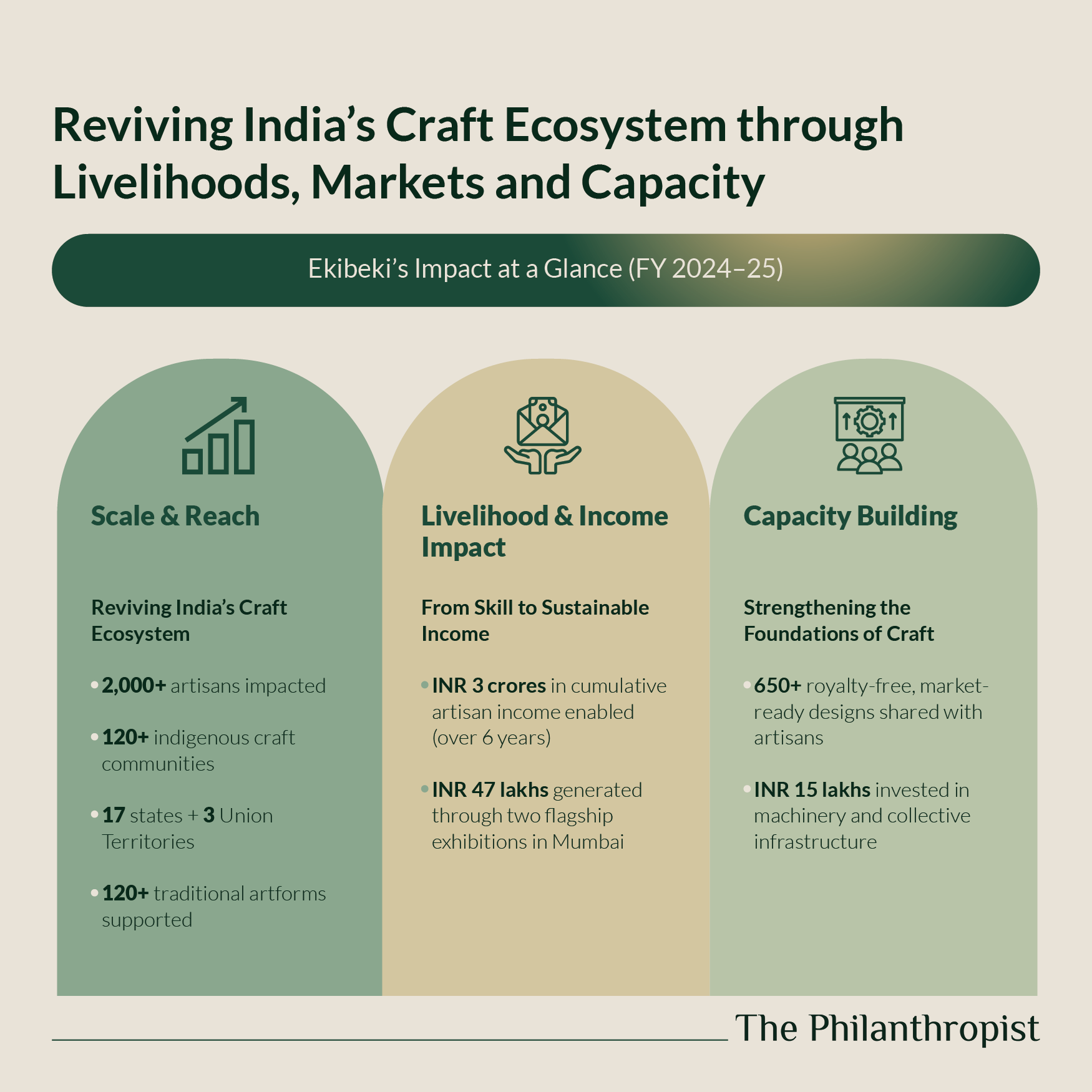
A snapshot of Ekibeki’s work across livelihoods, market access, and capacity building to revive India’s craft ecosystem
Stories from the Field
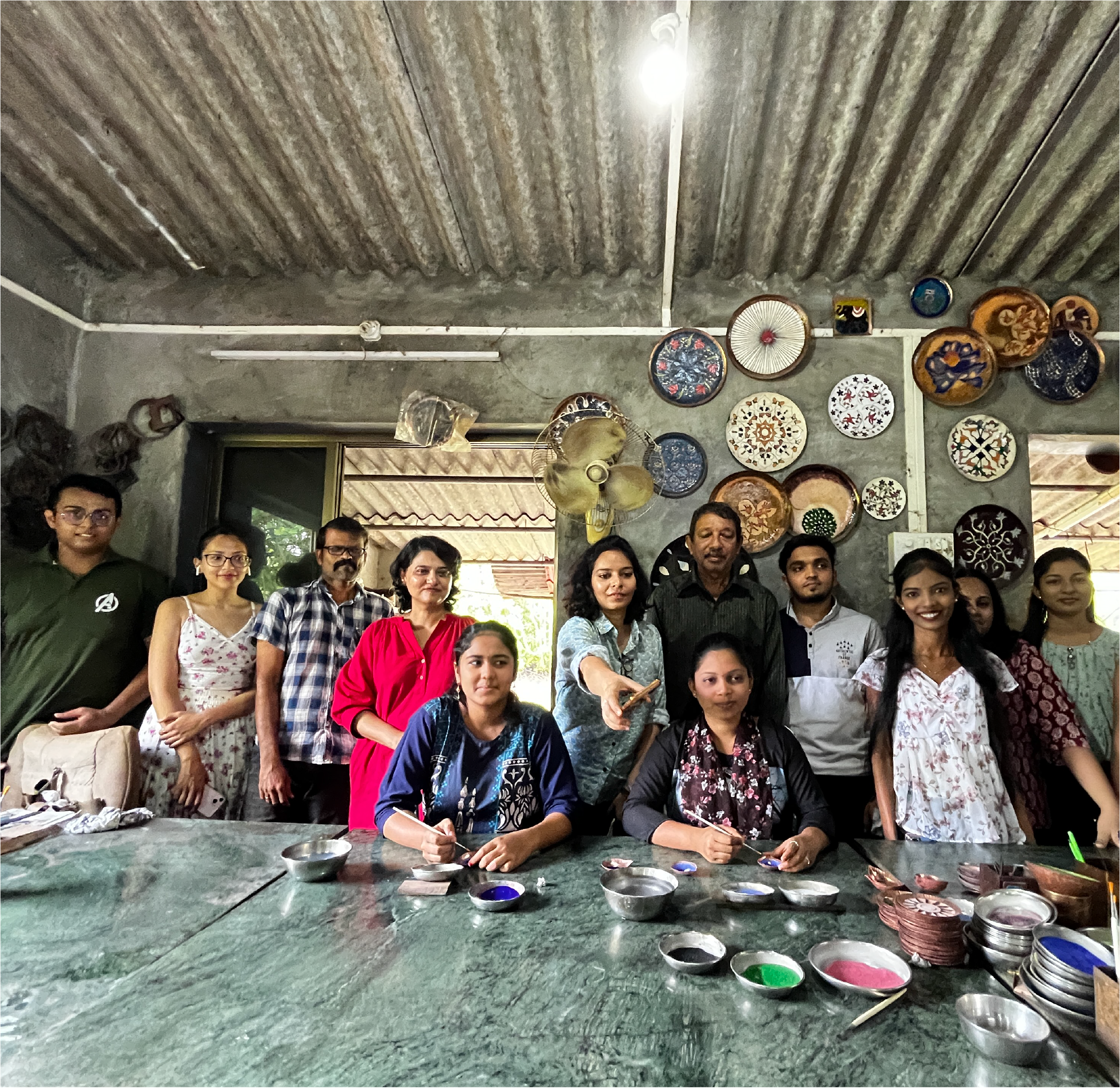
Despite its structural rigor and sound economics, Ekibeki’s impact is most apparent in the shifts within artisan communities. Vishpala recalls, “In 2004, almost seven or eight families were working in the copper enameling cluster in Alibaug. When I got back in 2018, there was one family left.” Ekibeki began by working with the family that remained, and slowly, things began to shift. Today, the cluster has grown to 25-30 artisans across three families, with younger members returning to the craft. A similar arc defines the story of Gond artist Choti Tekam. In 2019, when Ekibeki created its first Gond stationery range, Choti sold her artwork to them and became the recipient of royalties for the first time. It took Vishpala some explaining for Chhoti to understand the concept. “We’ve been working with Ekibeki for the last 7-8 years. It has been a great opportunity. We’ve got many ideas since — we had the chance to work on fabric, on plywood. The response to our work has been really positive, too,” said Choti over voicenotes in Hindi, when asked about her experience working with them.
Rogan artist Rizwan Khatri returned to a practice his own family had nearly lost. Rogan Art had passed from his grandfather to his father, but by 2001, the tradition had fallen away under financial strain. Rizwan began again at fifteen, working on farms by day to afford pigments and materials, teaching himself through experimentation — even sourcing stones from nearby forests to develop darker colors. Over time, support from designers, NGOs, and government initiatives helped him reach markets, train women from his village, and build a small team. Through Ekibeki, he gained exposure to corporate commissions, including projects for Starbucks and Great Eastern Shipping Company, and insight into how contemporary markets function. One of his works was later selected by the Government of India as a diplomatic gift to Japan’s Prime Minister. Today, Rizwan has trained over 45 women, including artisans with physical challenges, introduced Rogan Art to garments and handloom, and ensured the craft’s continuity within his own family.
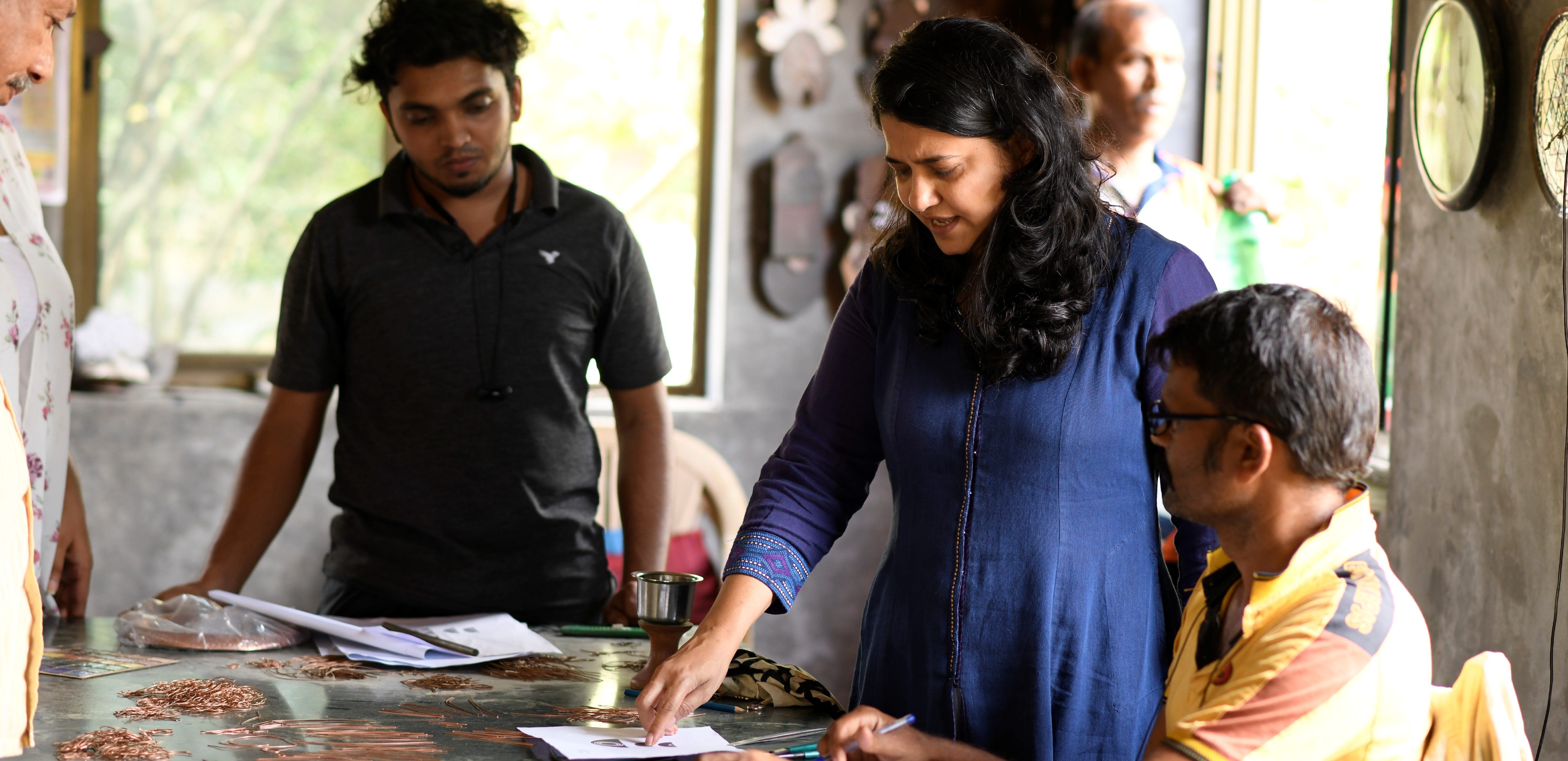
Vishpala Hundekari engaging closely with artisans during a design development session
A Preservationist Approach for India at 2047
Beyond immediate livelihood creation, Ekibeki is equally ambitious in its preservationist lens. Their approach is two-pronged: scale crafts that can sustain contemporary demand, such as bamboo, and protect those that have limited market applications. “Some belong only in a museum,” Neelesh acknowledges. “But some can be reinterpreted, mixed with other crafts, and made to survive.” The Hundekaris have plans for a travelling exhibition of endangered crafts.
Their hopes for India in 2047, too, are both practical and structural. Vishpala points to an earlier loss: crafts that once shaped India’s economy and identity have been pushed to the margins. But she’s hopeful that the recent resurgence of interest in homegrown crafts, especially from younger Indians, is a sign of things to come. Neelesh would prefer to see more attention paid to the many lesser-known crafts and artisans who are just as skilled but are overshadowed by others.
The Hundekaris’ philanthropy is rooted in its commitment to creating more space, building markets and capabilities, and restoring livelihoods to practitioners of Indian crafts, and Ekibeki’s work reflects this expansiveness in its intention: patient design, patient markets, patient listening, offering progress that is built incrementally. Crafts in India@2047, they believe, will also require this discipline from philanthropists who back long-term capability building and institutions which are as supportive as they are accountable.
The future of crafts in India, to Vishpala and Neelesh, is a development imperative. They aspire for artisan-led economies to thrive with institutional support. As independent India moves towards its centenary, the Hundekaris believe the sector will need exactly the kind of long-view model of philanthropy where partners can back capacity building, invest in capabilities, and stay the course long after the first product is made.


YOU MAY ALSO LIKE

Read more

Read more
_1028133513.png)