Designing for Those Without a Voice: Anita Dongre’s Mission to Raise Awareness for Animal Conservation in India
Sometimes a single decision is less like a flash of lightning and more like the steady turning of a windmill: small blades moving, hour after hour, until the energy becomes undeniable.
For Anita Dongre, that process has always proven relational. Like the forests she now speaks of with urgency and care, her philanthropic imagination has grown within a dense ecosystem of influences. There is Jane Goodall’s lifelong fidelity to animal communities, marked by patience rather than spectacle. There are grassroots forest defenders, negotiating tree by tree, village by village, to protect what cannot advocate for itself. There are women’s movements like SEWA, which have long insisted that dignity, livelihood, and agency are not separate ambitions, but a single, indivisible promise. Together, these influences have quietly reshaped how Anita understands responsibility as solidarity.
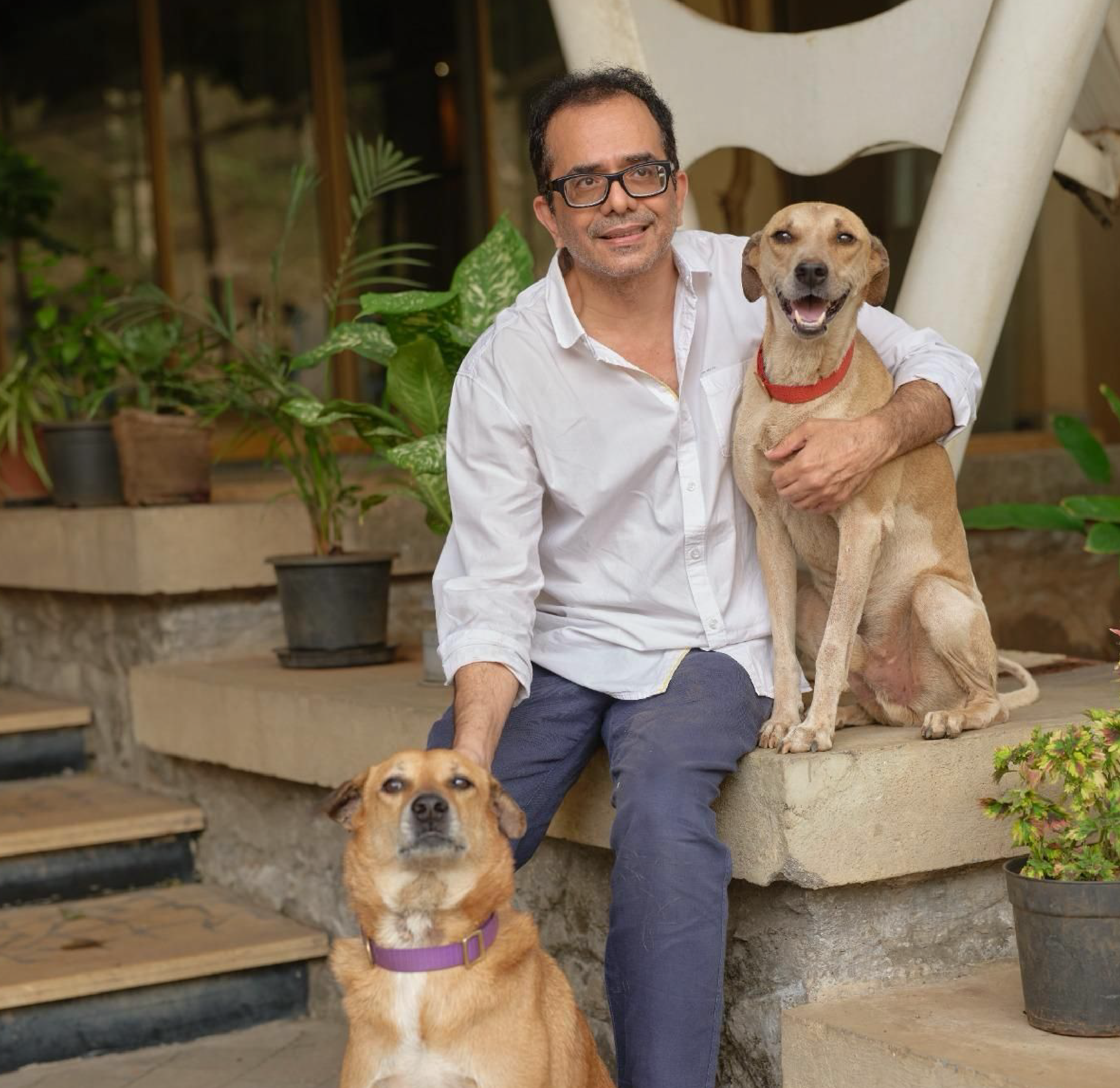
Closest to home, however, is her brother, Mukesh Sawlani. Growing up side by side, the siblings learned early that compassion was not a feeling to be admired, but a discipline to be lived. It was in these shared experiences that the foundations of Anita’s worldview were laid down.
Seen in this light, Anita Dongre’s decision to bring fashion and conservation into a deliberate partnership under the banner of Rewild feels less like a pivot and more like a continuation. At first glance, the pairing appears improbable: couture, with its choreographed runways and global visibility, set alongside conservation’s slow, often unseen labor to protect elephants and the fragile habitats that sustain them. And yet, convergence reveals a deeper truth that the industry itself has long obscured. Fashion is an ecological enterprise. Every garment begins in soil and water, climate and labor, bound to living systems that are too often treated as expendable. Rewild emerges from this recognition, that an industry built on beauty can no longer afford to look away from the conditions that make that beauty possible.
A Childhood in Color, Craft, and Calling
Born into a Sindhi family in Jaipur, Anita Dongre grew up immersed in the textures, rhythms, and vibrant hues of Rajasthani craft traditions. “For me, Jaipur’s architecture, markets, and folk arts were formative teachers, and really shaped my visual language,” infusing her earliest creative instincts with the beauty of handcraft and cultural expression. Over the years, her journey is marked by milestones that map both artistic ambition and philosophical evolution. From launching the eponymous Anita Dongre label to brands like AND, Global Desi, Grassroot, and Pinkcity Jewellery, she has consistently reimagined how Indian fashion can serve women, artisans, and heritage traditions.
Even as her label rose to global prominence, Anita Dongre’s work was animated by a more insistent inquiry: what responsibility does fashion carry for the world it draws from? Long before sustainability became an industry refrain, her choices reflected a deep unease with extraction as a norm. A lifelong love for animals, and a refusal to accept cruelty as collateral, shaped her belief that beauty cannot be built on harm. She began to question not only materials and methods, but the larger systems of production that deplete ecosystems, endanger species, and sever craft from care. For Anita, fashion could not remain indifferent to these costs; it had to reckon with them.
That reckoning took a more deliberate, collective form with Rewild, launched by the Anita Dongre Foundation in 2023. Rewild made visible the interdependence between craft, creativity, and conservation, turning couture into a platform for stewardship rather than excess. As Anita reflects, the effort was to offer structural recognition to what has always been true: that fashion, nature, and culture are bound by a single, urgent question—what futures are we willing to protect?
It’s a philosophy echoed across their conservation work as well. “We forget that our future is tied to theirs,” Anita says. “Compassion for animals is foundational. It tells you what kind of society you want to build.” And finally, there is a question of sustainability. As Mukesh Sawlani grounds it, the goal is not exceptionalism but normalcy: practices so embedded that they shape how fiber is grown, cloth is woven, garments are worn and eventually returned to the cycle. In this ordinariness lies Anita Dongre’s belief that the futures we imagine are revealed in the systems we choose to make every day.
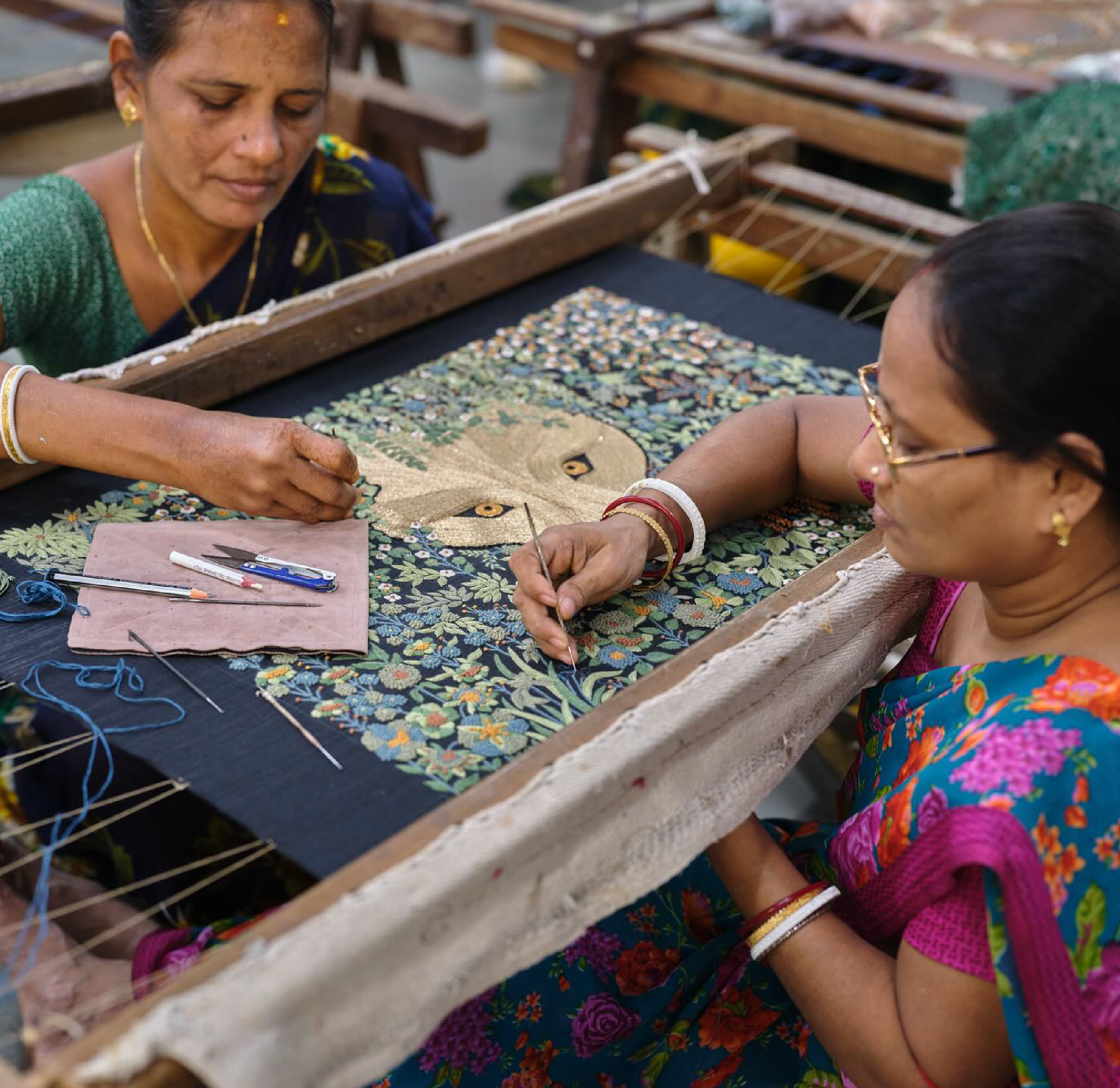
Working with the women of SEWA since 2015, Anita Dongre champions agency and transformative change
“Our partnerships - whether in craft development, rescue and rehabilitation of animals, or conservation work - remind us that change is always collective. We simply hope to contribute a small part to efforts much larger than ourselves. Rewild is an outcome of these sources of inspiration as a space for us to bring other philanthropists together to engage with craft and wildlife conservation in a medium that offers reflection and beauty in equal measure, and, more deeply, what we hope will become a metaphor for Fashion for Good as our industry grows.”
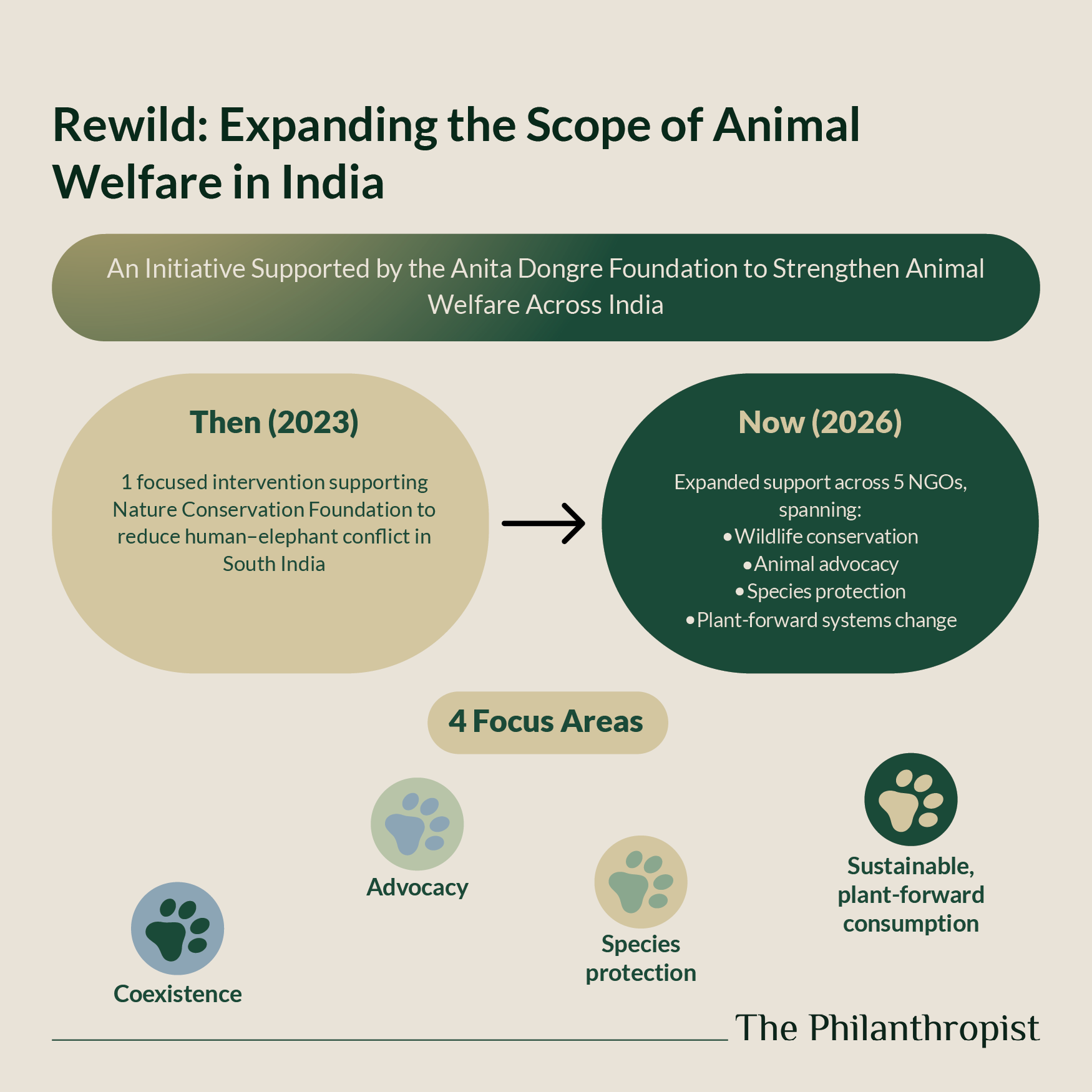
Rewild’s journey from a single conservation intervention to a multi-partner, systems-focused approach for animal welfare in India
Foray Into Philanthropy
Over time, fashion itself became Anita Dongre’s primary instrument of giving. Growing up within a large, close-knit extended family, she was surrounded by stories of endurance, mutual support, and generosity as reminders that individual choices rarely stop with the individual. This understanding of interconnectedness became a lens through which she approached both design and decision-making, allowing her to hold a bridal ensemble and a community investment within the same moral frame.
When Anita’s engagement with philanthropy took more formal shape, particularly in the realms of animal welfare and conservation, it followed an ethical line she had long drawn for herself. A committed vegan and board member of PETA Asia, she has been unequivocal in rejecting animal cruelty, excluding leather, fur, and wool from her work well before such positions found mainstream acceptance. For Anita, ethics are not declarative but operational. From workplaces designed to recycle water and reduce energy use, to partnerships that systematically remove animal harm from supply chains, compassion is embedded into how her businesses function, not merely what they represent.
As her commitments expanded, the Anita Dongre Foundation emerged as a structural expression of this worldview, bringing together her social and environmental engagements under a single, intentional framework. The Foundation spans a wide spectrum, from strengthening livelihoods for rural women artisans to supporting wildlife conservation, allowing her philanthropic work to move beyond episodic interventions toward sustained, systemic engagement.
At no point was fashion a retreat from these concerns. If anything, it became the terrain on which they were most rigorously tested. As her career advanced, personal convictions were translated into organizational choices, and ethical commitments into scalable practice. The Grassroot line stands as one of the clearest manifestations of this evolution: an effort to revive Indian crafts while ensuring artisans are not romanticized but respected, compensated fairly, and offered dignity through stable livelihoods.
A pivotal influence in this journey came through Anita’s engagement with the Self-Employed Women’s Association (SEWA). Encountering women whose extraordinary skill coexisted with fragile economic security sharpened her understanding of empowerment as something that must be locally rooted and self-directed. SEWA’s model enabling women to work within their villages, on their own terms: aligned deeply with her belief that economic agency is inseparable from personal autonomy. From early material choices guided by her vegan values to business processes designed to reduce waste, recycle resources, and honor labor, her practice evolved into a coherent ethic.
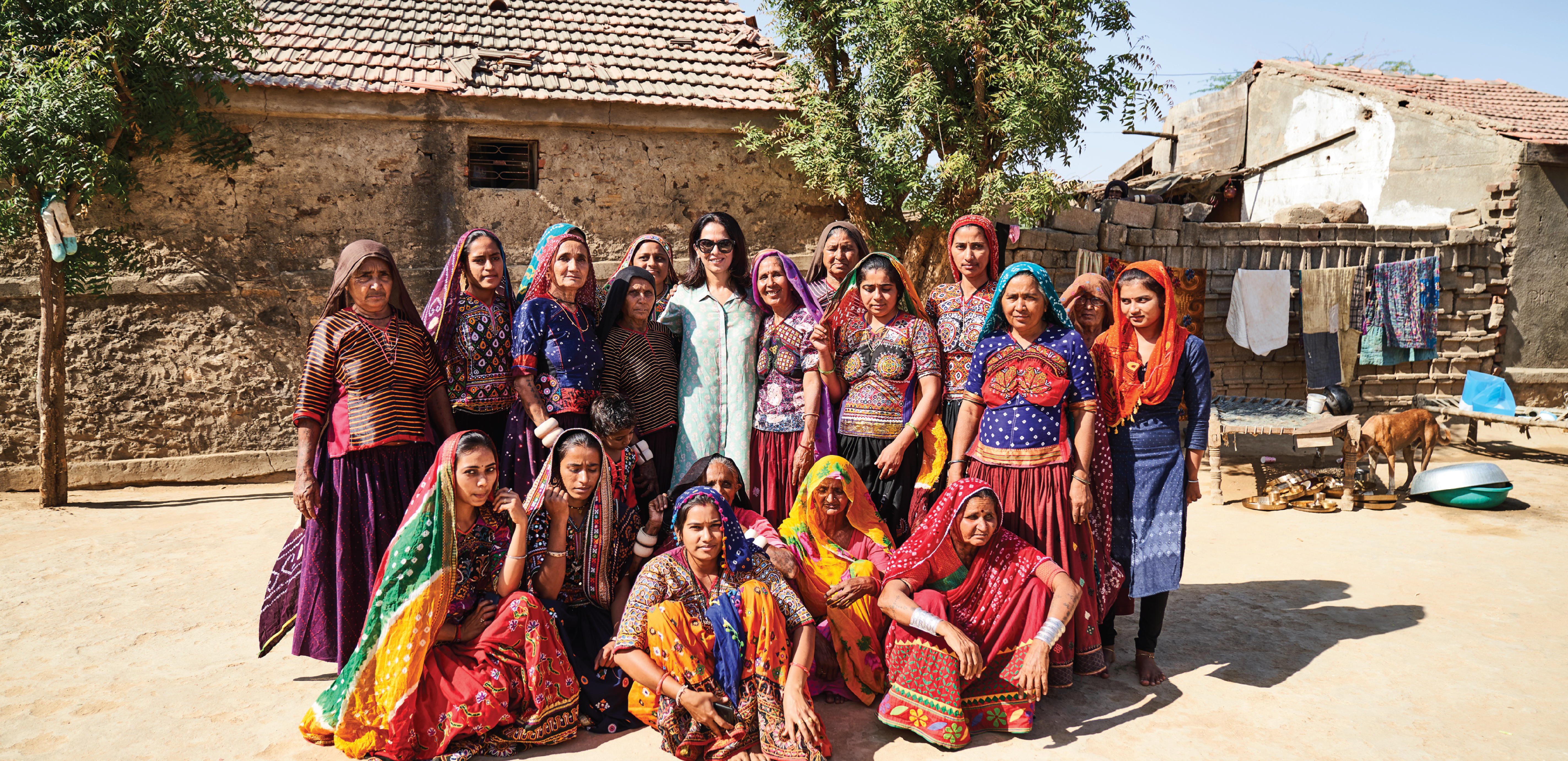
Anita Dongre with the women of SEWA, building sustained partnerships rooted in agency, ownership, and lasting systemic change since 2015

Where Vision Becomes Practice
If Anita imagines what could be, Mukesh Sawlani ensures it can be built. Where Anita speaks about interdependence between fashion, animals, and forests, Mukesh translates that belief into partnerships, processes, and the everyday discipline required to sustain change. It is a partnership that underscores a larger truth: courage is more durable when it is collective. At the heart of their work lies a belief in coexistence. "The consequences of our choices are never contained: they shape the lives of people we live alongside, the animals without voices we seek to protect, and the forests that endure in service of all life.”
Partnerships with groups like SEWA reinforce the conviction that empowerment must be rooted in agency rather than benevolence. Collaborations with conservation organizations such as the Nature Conservation Foundation bring scientific rigor and ecological insight, particularly in navigating the complexities of habitat loss and human–wildlife conflict. These collaborations reflect a recognition that durable change demands many kinds of knowledge: scientific, indigenous, artisanal, economic, and ethical.
Ripples of Influence
Anita’s influence in the fashion world is palpable, and her commitment to Rewild has been received enthusiastically by the industry, as an opportunity to have crucial conversations about sustainability and conscious consumption. In fact, across India, a new generation of designers is engaging more seriously with questions of sourcing, scale, and sustainability. Consumers, too, are asking sharper questions about provenance and ethics, while conversations around craft preservation, slow fashion, and ecological accountability have moved closer to the centre of mainstream fashion discourse.
This shift is reflected in the platforms shaping industry narratives. From trade publications to glossy magazines, Indian fashion is increasingly being examined through the lens of environmental and social consequence, suggesting a cultural recalibration that extends beyond individual brands. For those inspired by Anita’s work, her advice is clear: begin with authenticity and a willingness to learn. Understand that sustainability is a practice that must permeate every decision, from materials and processes to employment and community engagement. Long-term commitment, patience, and humility, she suggests, create the conditions for deep impact.
Fashion, Philanthropy, and India @ 2047
When Anita Dongre speaks about the India she hopes to see by 2047, she doesn’t describe it in grand abstractions. Instead, she returns to an image she carries with her: a country learning to walk gently on the earth, a country confident enough to be compassionate. Fashion, in her telling, is not exempt from this evolution. “Design should honor nature, not borrow from it carelessly. If we say we love craft, we must also love the ecosystems that raised those crafts — the forests, the animals, the communities who have held these traditions for generations.”
In her vision, fashion becomes a kind of stewardship: garments that pay respect to the land, economies that reward artisanship rather than exploit it, and beauty that does not leave a wound behind. Mukesh, frames the future in terms of capability rather than charity. Both siblings believe that by 2047, collaboration must become India’s strongest muscle. Anita puts it simply: “No brand, no NGO, no government department can solve these problems alone. The only real progress will come from working in ways that are transparent and interdependent.”
By 2047, India could stand as a nation where fashion, artistic heritage and the natural world hold equal weight in shaping both culture and society, and where philanthropy moves from the periphery to become woven into everyday life. Rewild’s vision is a call to reimagine what such progress looks like.
Philanthropists like Anita and Mukesh occupy a unique threshold in India today. In a world where the most urgent issues rarely sit neatly within one sector, their willingness to span boundaries, between fashion and forest, between artisans and elephants, between profit and purpose. And perhaps this is the real power of their journey. Progress is seldom powered by sudden transformations but by those steady turns of the windmill, the patient, persistent choices to honor life in all its forms, and to ask, again and again, how we might leave the world gentler than we found it.


YOU MAY ALSO LIKE
_1891054289.png)
Read more


Read more
_1028133513.png)