A Joyful Responsibility: Rohini Nilekani’s Philanthropic Journey through White Spaces and Hopeful Futures
Rohini Nilekani did not arrive at her philanthropy with answers, but with questions.
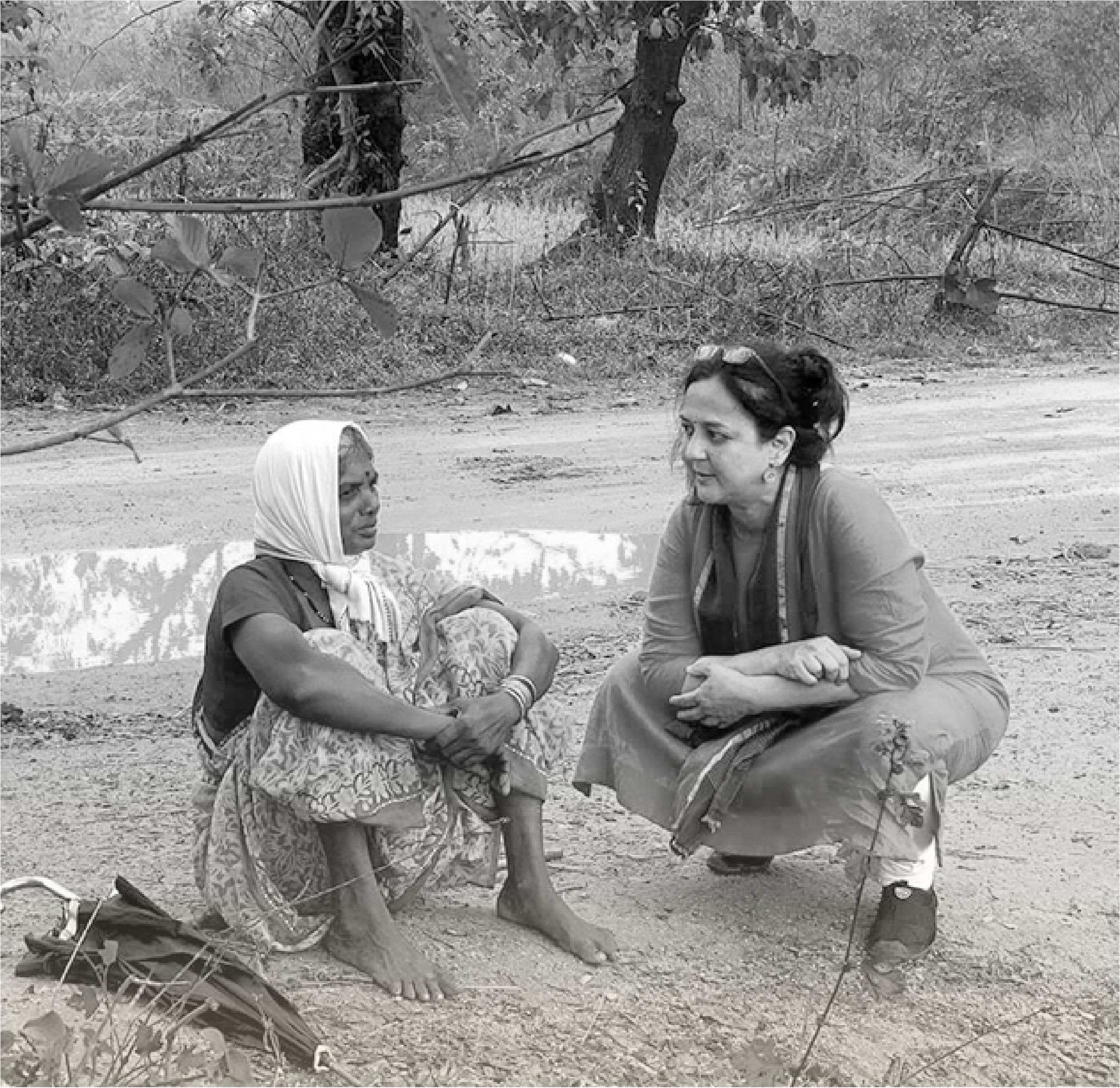
There is a particular kind of discipline in journalism: the discipline of not knowing. “You're trained in the willingness to say, ‘I don’t yet understand this. Tell me more.’” As a young journalist covering crime, courts, and environmental struggles, Rohini learned to ask questions that were often uncomfortable, sometimes inconvenient, and always revealing. Who holds power here? Who bears the cost? And who has learned to live with the consequences?
This instinct, and her questions never left her. Over the last 35 years, Rohini’s philanthropy has been shaped by the same inquiry that once guided her reporting. Each initiative she has supported begins with curiosity. What is really happening here? Who has tried to address this before, and why did it fall short? What assumptions are being made, and who is being left out? These questions have led her repeatedly to places that are overlooked, underfunded, or inconvenient to engage with. In India’s social landscape, Rohini suggests, “...vulnerability does not always gather where problems are most visible.” Instead, it tends to accumulate where responsibility is diffused, and accountability slips through the cracks. These spaces are least likely to attract patient capital, and most in need of it. Seeing them requires the same attentiveness journalism demands: the ability to notice what others pass by, and to stay long enough to understand why. Rohini’s philanthropic vision and journey are anchored in this understanding. In her book Samaaj, Sarkaar, Bazaar, she discusses the fragile continuum for a citizen-first approach, which discusses a resilient, participatory society that keeps the other two aligned with the public good.
To trace the connection between Rohini’s journalistic inquiry and her philanthropy is to understand what makes her a singular presence in India’s giving ecosystem. She does not give at a distance. She gives everything at her disposal. She remains present, attentive to what the work reveals over time. In a landscape often driven by solutions, she remains steadfastly committed to inquiry. And in doing so, she has expanded not just the scope of Indian philanthropy, but its imagination, in showing how the simple act of asking better questions can quietly, insistently, reshape what change looks like.
A Moral Inheritance
Rohini is careful to resist the idea that her philanthropy begins with wealth. Long before resources accumulated, she says, the values that now shape her giving were already in circulation. She recalls growing up in a middle-class Mumbai household, watching generosity, humility, and care modeled with equal ease and intention.
In that sense, Rohini does not see herself as a first-generation giver. Wealth may have arrived in her generation, she says, but generosity did not. Her maternal grandfather was a philanthropist in his community, and her paternal grandfather, she recalls, “gave all of himself.” This inheritance of values has shaped more than the quantum of her giving. It keeps her work tethered to something older, more continuous: a culture of humility deepened by her family's disposition, and a steady, patient commitment to giving one’s time and resources for social good.
In 2017, when Rohini and Nandan Nilekani joined the Giving Pledge, committing to give away at least half their wealth in service of the public good, it marked a public articulation of principles they had long lived by. Bill Gates hailed Rohini and Nandan Nilekani as “a remarkable example of generosity.” Since then, she has been repeatedly recognized, most notably through the EdelGive-Hurun India Philanthropy List, as among the country’s most generous women givers. In the last financial year alone, her giving amounted to INR 199 crore, underscoring a sustained commitment to scale, equity, and public purpose.
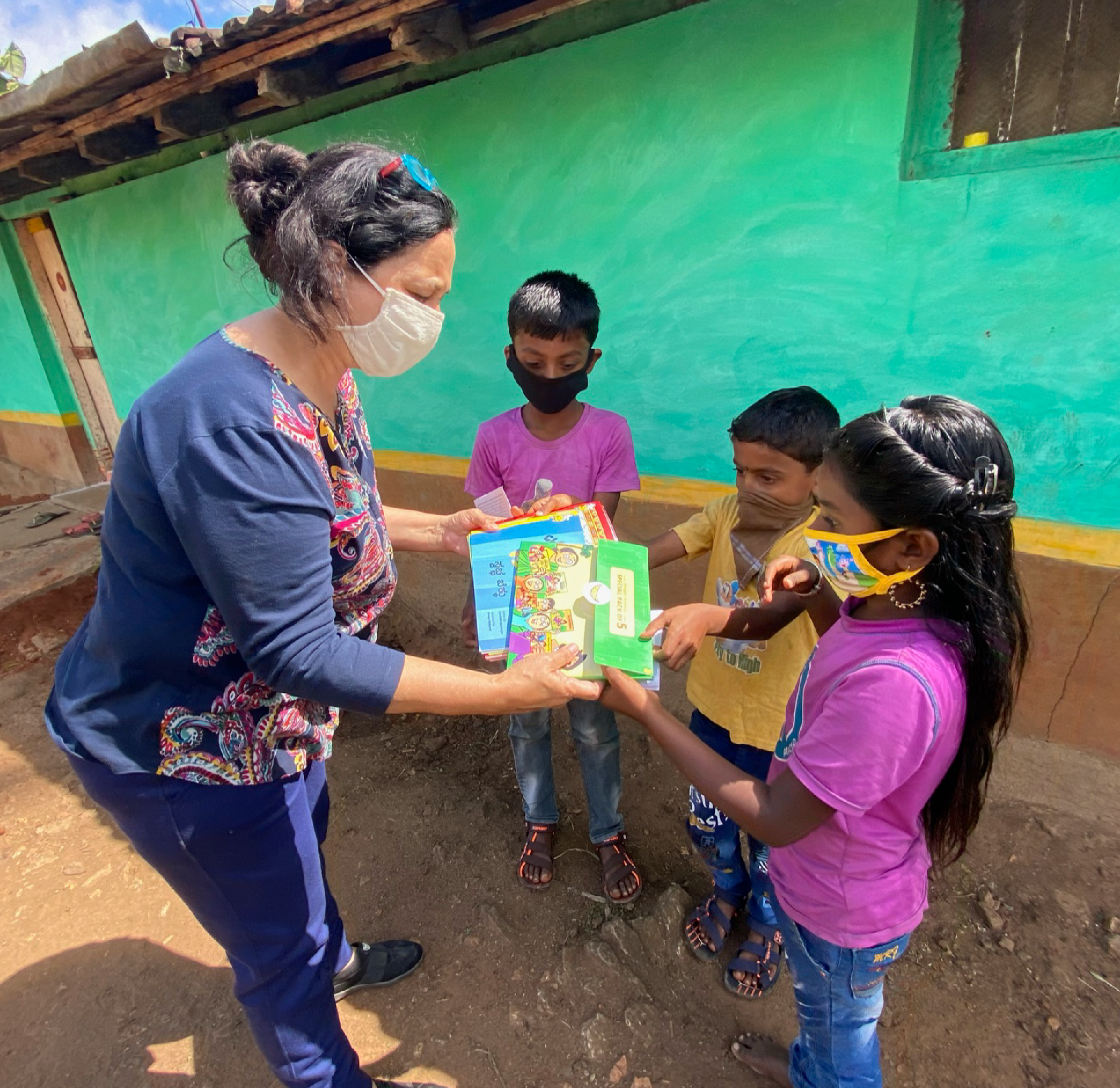
Rohini Nilekani amidst children in a community-led learning environment
“Many funders, anxious to ensure impact, end up “poking” too much, demanding excessive reporting, creating layers of compliance, or withholding resources until the promise of certainty appears. When you start with trust, trust is returned.”
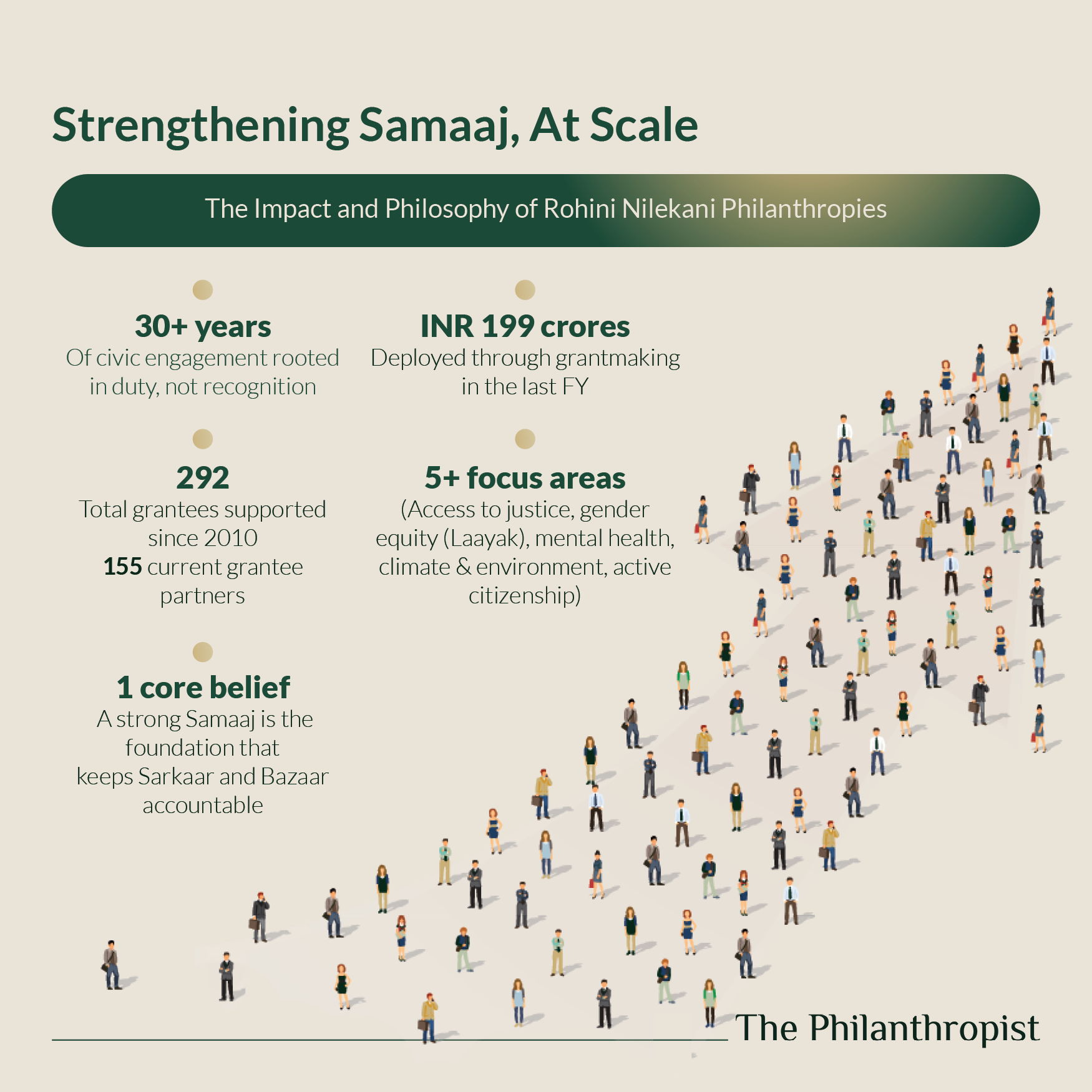
Strengthening samaaj at scale - key milestones and focus areas of Rohini Nilekani Philanthropies
Building Institutions that Can Outlast Individuals
Her early years as a philanthropist drew Rohini Nilekani toward children’s education. By the early 2000s, India had made impressive gains in school enrolment, yet learning outcomes lagged stubbornly behind. Millions of children, especially in government schools, were moving through the system without acquiring basic reading skills. Rohini’s support for the Akshara Foundation emerged from this recognition. Akshara worked alongside state governments to strengthen foundational learning, focusing on early literacy and numeracy rather than one-off interventions. The work required patience and partnership. It addressed a structural bottleneck that would shape a child’s entire life trajectory.
Around the same time, Rohini co-founded Pratham Books, guided by a belief that every child deserves to grow up with stories. At the time, children’s publishing in India was constrained by cost, language, and reach. Books in Indian languages were scarce, and those that existed were often priced beyond the reach of families and schools that needed them most. Pratham Books challenged this scarcity mindset head-on. By producing high-quality, affordable books, and later releasing many under open licenses, it transformed stories into shared public goods. Teachers, parents, and libraries could print, adapt, and circulate them freely. In doing so, the organization allowed children in the remotest parts of India to encounter stories that felt like mirrors of their own lives and windows into others’.
This commitment to openness, scale, and systemic reach came into sharper focus with the creation of EkStep in 2014, co-founded by Rohini and Nandan Nilekani. By then, a new question had emerged: how could learning resources travel across India’s vast and uneven educational landscape without being limited by geography, language, or institutional silos? EkStep was conceived as a digital public infrastructure for learning, to enable an entire ecosystem of teachers, parents, governments, and civil society to create, discover, and adapt resources. At its core was a belief Rohini had long held: that in education, no solution succeeds unless it is accessible to the whole system. EkStep’s emphasis on interoperability, open standards, and collaboration reflected this insight.
Her philanthropy has tended to drift toward the margins of the map — the underfunded “white spaces” where capital, when used with care, can do more than put out fires. It can change the shape of what comes next. Over time, this instinct has given her work a quiet coherence. Rather than chase visible wins, her support has moved toward the less glamorous work of strengthening connections: between citizens and the state, data and the decisions it is meant to inform, grassroots action and the policy structures that can sustain it. Much of the work at RNP begins this way by noticing the gaps, and addressing them before they widen into something harder to repair.
India’s water crisis is not singular; it is layered, shaped by geology, governance limitations, climate variability, and entrenched rural inequality. Too often, solutions focused narrowly on infrastructure without addressing who controls water, who understands it, and who bears the consequences of its mismanagement. When Rohini’s attention turned toward water, she founded Arghyam, committing to a long-term vision of safe, sustainable, and community-led water access. Its work was deliberately rooted in the ground and based on a crucial insight: water security must be locally rooted, scientifically informed, and governed by the communities who depend on it.
Arghyam partners with organizations embedded on the ground, investing in the slow work of capacity-building, helping communities map aquifers, monitor water quality, and make collective, informed decisions about shared resources. Local action, Rohini has realized, needs to be complemented by shared knowledge. This insight led to a second, enabling intervention: the creation of ForWater, a digital platform that aggregates insights on water and sanitation.
She has applied this same lens to gender. In philanthropy and development work, most programs have historically focused on empowering women and girls: a focus that has been crucial, given enduring gaps in access, agency, and rights. Yet in Rohini’s careful reading of the field, she detected another silence: the near absence of boys and men in the conversation, not merely as allies in rhetoric but as participants in transformation. RNP has also been funding organizations that dare to include them, by reframing gender justice as systemic rather than segmented. In doing so, her philanthropy recognizes that advancing equity requires expanding the aperture beyond a single cohort to the ecosystem of norms and behaviors that sustain it.
Across her philanthropy, Rohini Nilekani has consistently invested in public spaces as vital civic infrastructure: places where ideas can be debated, curiosity can be nurtured, and citizens can encounter one another beyond lines of class, discipline, or ideology. Her support for the Bangalore International Centre and the Bengaluru Science Gallery reflects a belief that a healthy democracy depends not only on strong institutions, but on shared spaces that invite dialogue, inquiry, and imagination. One of her most recent commitments reflects this same long-term view. Through the establishment of the Centre for Brain and Mind at NIMHANS and NCBS, Rohini is investing in open, long-term research infrastructure to advance India’s understanding of mental health. In a field long underfunded and stigmatized, this investment positions access to mental health research as both a scientific frontier and a public good. Her commitment extends to creating a shared platform that connects cutting-edge research with everyday life and bring science closer to society, most notably through Manotsava, India’s largest mental health festival, to spark dialogue and make mental health research accessible to all.
Collectively, these choices point to a philanthropy in evolution, with Rohini committed to a form of giving that accepts risk, privileges long horizons, and recognizes that strengthening the public realm often requires boldness before it yields measurable returns.
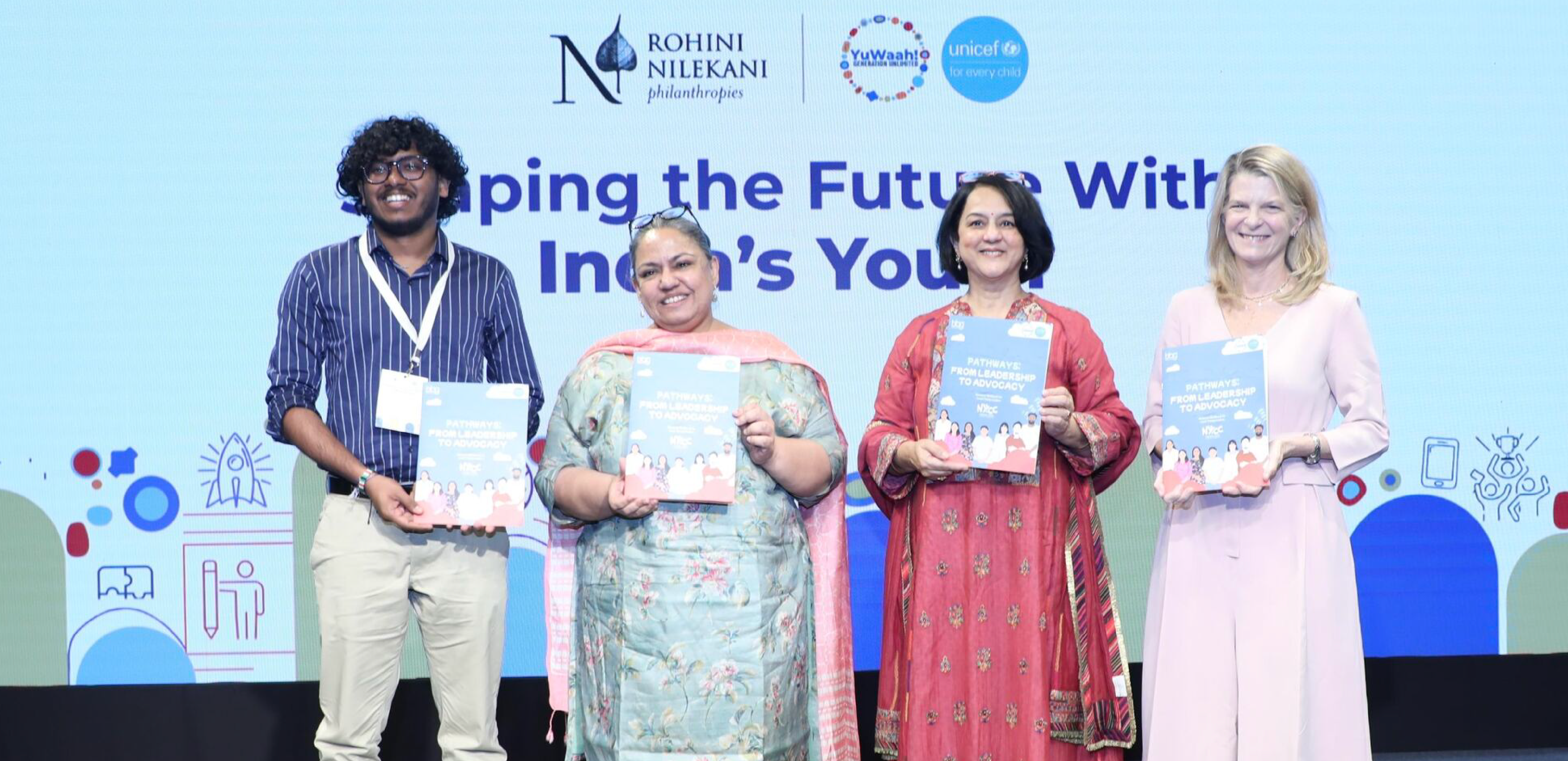
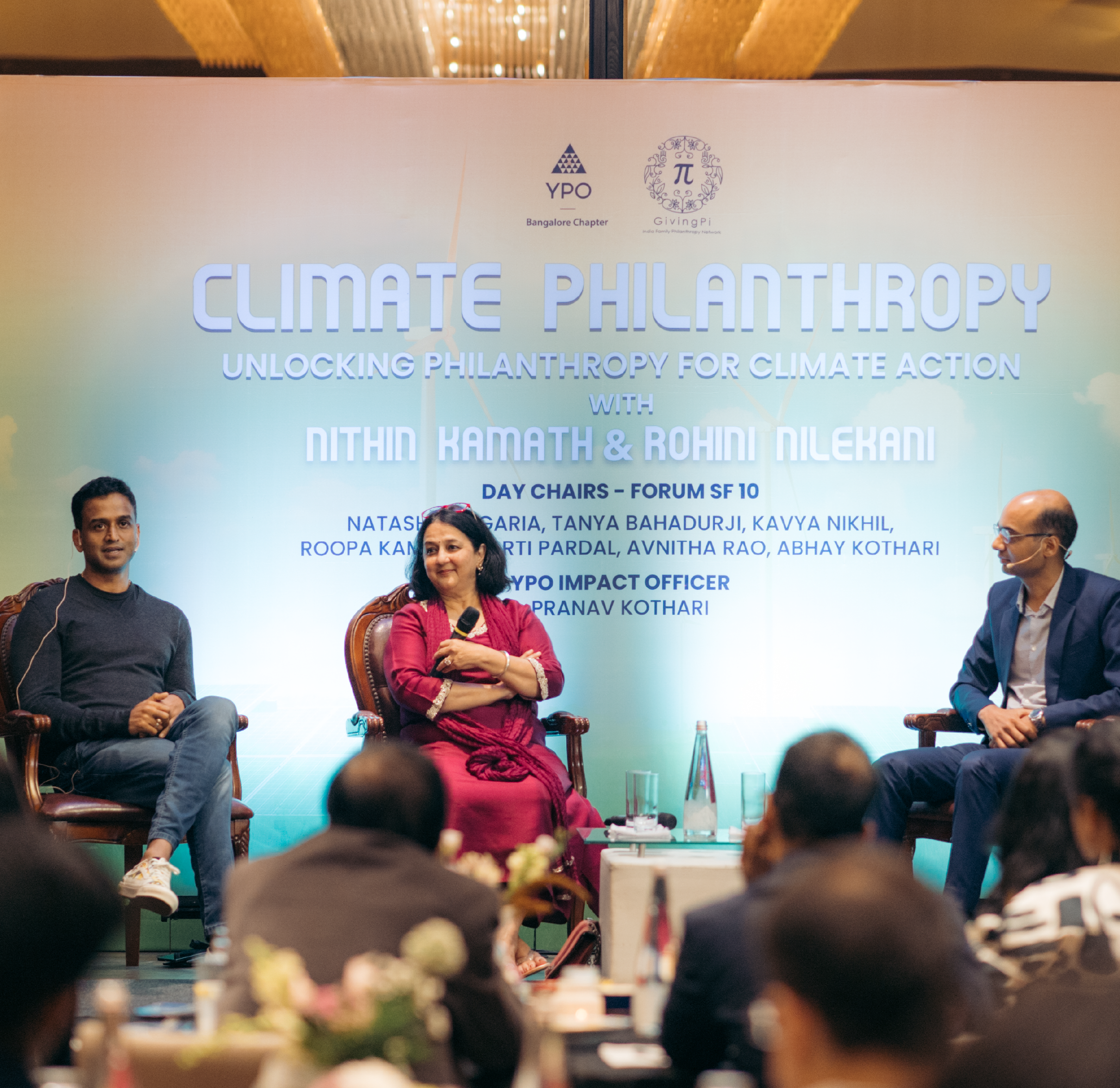
Rohini Nilekani at the launch of Pathways: From Leadership to Advocacy, alongside changemakers and global partners working to shape the future of youth leadership in India
A Joyful Responsibility
Rohini Nilekani occupies a singular place in India’s philanthropic landscape. Her perspective has been shaped, patiently and unmistakably, by three forces held in quiet balance: the values she absorbed at home, the habits of inquiry she honed as a journalist, and the lived sensitivity of her philanthropic journey.
It is perhaps why Rohini resists the easy shorthand of a “woman giver.” For her, bold philanthropy has to do with freedom: the freedom to step beyond what is safe, sanctioned, or socially applauded, and into uncertain terrain where imagination has room to work. Rohini is convinced, there is vast, untapped potential across industries and communities, with women waiting to be asked a more meaningful question than how much can you give? Instead: What do you care about?
Over time, she has moved steadily from funding direct services to building shared platforms. The interventions championed by RNP are rarely standalone projects. They are scaffolding enabling citizens, civil society, the state, and markets to meet one another differently, and to solve problems collectively rather than in isolation.
It is no surprise, then, that Rohini Nilekani’s counsel to the next generation of philanthropists carries both urgency and hope. Philanthropy, she says, begins with the courage to learn much and learn fast, to pair ambition with humility, and to listen deeply to those who live closest to the problems being addressed. She urges younger givers to look deliberately for the “white spaces.” “Open your head, your heart, and your pocket,” she says. Her call is to act with foresight and conviction. “Take risks the state cannot afford to take. Think a decade ahead. Do not be paralyzed by the fear of failure, but prepare for it, speak about it honestly, and use it to learn and adapt.”
As the country looks toward 2047, her philanthropy calls for trust-based partnerships, patient and unrestricted capital, and a willingness to walk alongside those doing the work on the ground, building social infrastructure that can endure across generations. And yet, even as she speaks of urgency and responsibility, Rohini never relinquishes joy. “Philanthropy is a joyful responsibility,” she insists. Generosity, she believes, should be witnessed not as sacrifice, but as meaning that builds culture, continuity, and belonging. Joy is not incidental to responsibility; it is what sustains it. Determined to share this joy with her family, and the communities she serves, she hopes to pass on a way of seeing the world, and its rhythms, with a belief that the smallest ripple of care can widen into a wave capable of holding a society upright.


YOU MAY ALSO LIKE
Read more

_1891054289.png)
Read more