The Rainmatter Approach to Climate: Philosophical, Experimental, Multidisciplinary
“Failing gracefully” is not the phrase you expect to sit at the ideological center of a climate action enterprise. This holds particularly true when the enterprise in question traces its roots to the first-principles ethos that shaped Zerodha, one of India’s leading stock brokerages. But Rainmatter Foundation, set up by Nithin Kamath, the co-founder of Zerodha, and Kailash Nadh, the Chief Technology Officer of Zerodha, to back climate action, ecological restoration, and build place-custodianship to strengthen resilience, has found the idea to be an invaluable guiding principle.
The truth is that much of climate work is improvisation. Kailash puts it like this: “Climate change is a global, accelerating, civilization-level problem. There is an abundance of scientific evidence, but there are no robust philosophical, political, and social models around it. A lot of what we do is philosophical experimentation incorporating scientific evidence.” The crisis is moving faster than the systems built to respond to it, the pressure is immediate, and there are no inherited models to rely on to guide solutions. In the absence of existing playbooks, the people working in climate action are responding to the crisis by building their methods in real time.
Rainmatter Foundation has shaped its work around the central idea of building these playbooks that Kailash returns to often: by viewing climate through a multi-disciplinary lens, building care and concern for commons and places through community stewardship, balancing experiments with objective realities, and the art of failing gracefully while you’re at it. For instance, even if two organizations working in separate corners — one on conservation, one on livelihoods — don’t align into a neat climate outcome, the effort isn’t necessarily wasted. If Rainmatter’s outlook feels unusually unbound by conventional philanthropy, it’s because its roots were never philanthropic in the traditional sense.
From Zerodha to Rainmatter
The seed goes back to 2013, when Kailash joined Zerodha to build the technology stack. Climate anxiety had entered his lexicon in his late teens and shaped most of his decisions through the 2010s. One of his earliest moves at Zerodha was to set up proper waste segregation in the office and talk about why it mattered. Over the years, Kailash carried these ideas into several conversations with Nithin.
While the seed germinated, the instincts at Zerodha were already pointed towards minimalism and frugality. Decisions were made with a bias towards less waste, less consumption, fewer unnecessary upgrades. This was shaped, in part, by Nithin’s long-standing unease with wealth concentration — the idea that a small group can accumulate disproportionate resources without a corresponding responsibility to redistribute them. He has often credited “monk-like” Kailash with helping him detach from the usual trappings of material success and become more conscious of his own footprint.
For Kailash, the starting point was the open-source world he grew up with. “Foundationally, my mental model is the open-source model,” he says. “I’d argue that how the open-source technology world works in contributing to the public commons, is one of the biggest forms of philanthropy.” The idea of contributing to a collective commons came long before the word philanthropy meant anything to him.
Within this culture, Rainmatter emerged as an extension of how the founders were already thinking and living. When Zerodha became profitable, the instinct to support climate-facing efforts surfaced in small, almost incidental ways — modest clean-up projects, bits of environmental work, but still nothing the team qualified as philanthropy. Kailash says, “As a technologist, I was always contributing to digital commons, and when we had material resources to give to other kinds of commons, we started doing that. As Zerodha grew, our ability to support causes grew naturally.”
By the late 2010s, climate impacts were unmistakable, and Zerodha had the capital to do more than piecemeal interventions. The team realized that running a high-growth fintech enterprise and supporting environmental work “in an ad hoc way wasn’t enough.” In 2020, Rainmatter Foundation became official. What began as a set of internal nudges has since become a $200-million endowment and an ecosystem supporting organizations and individuals working on critical issues at the intersection of climate change, urban and rural conservation and restoration, built environment, and ecosystem messaging. The foundation has since partnered with more than 100 organizations, with work spanning across 15 states and counting, including geographically remote regions such as the Andaman & Nicobar Islands. But building the foundation was only the starting point; the harder shift was deciding how to think about climate itself — what mattered, what was possible, and what kind of realism the moment demanded.
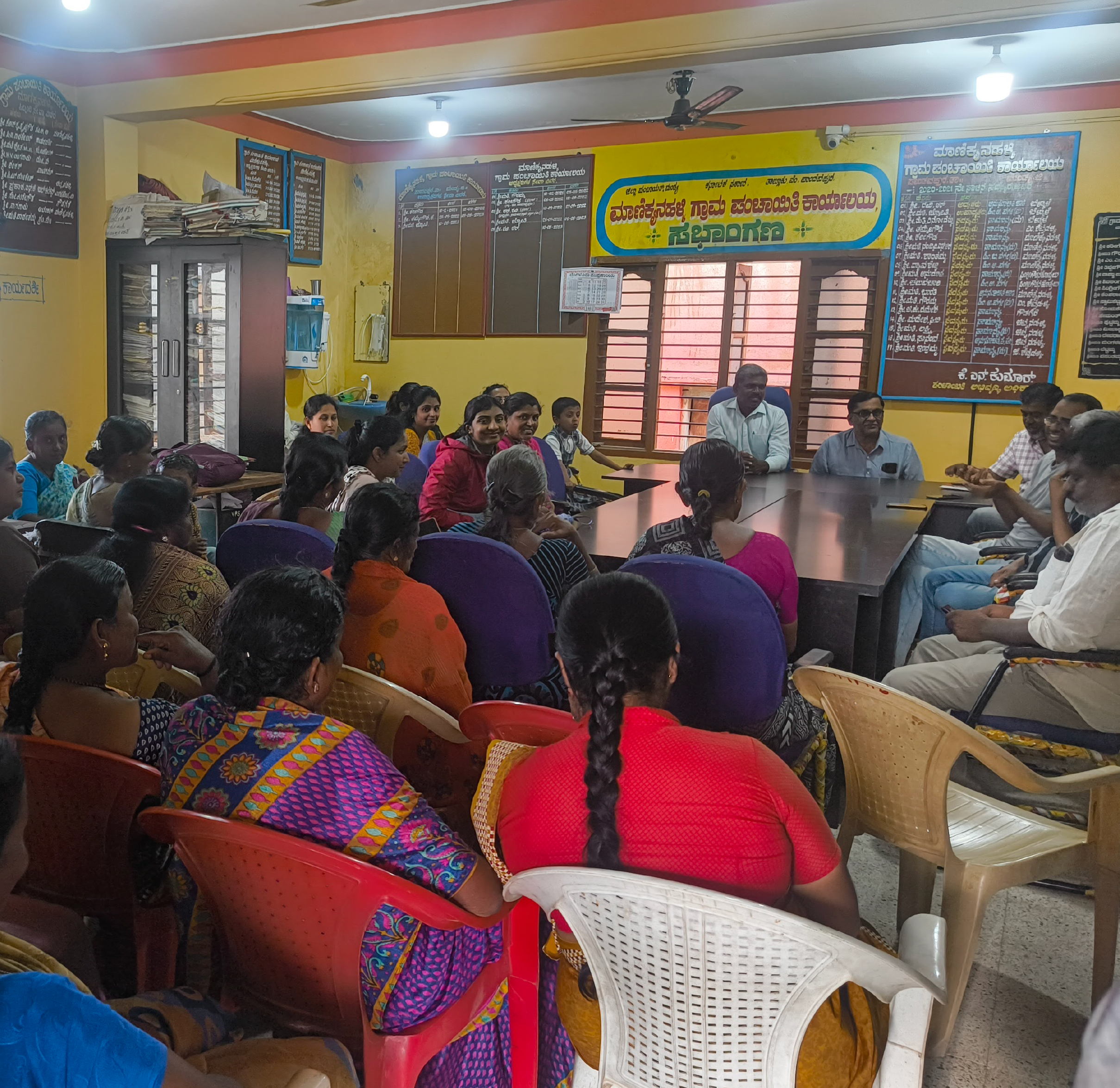
The Rainmatter team during an on-site visit
“At Rainmatter, even if a specific ‘climate goal’ fails, the ‘failure’ is still graceful, because a good organization or a community would have benefited from our support in isolation at least.”
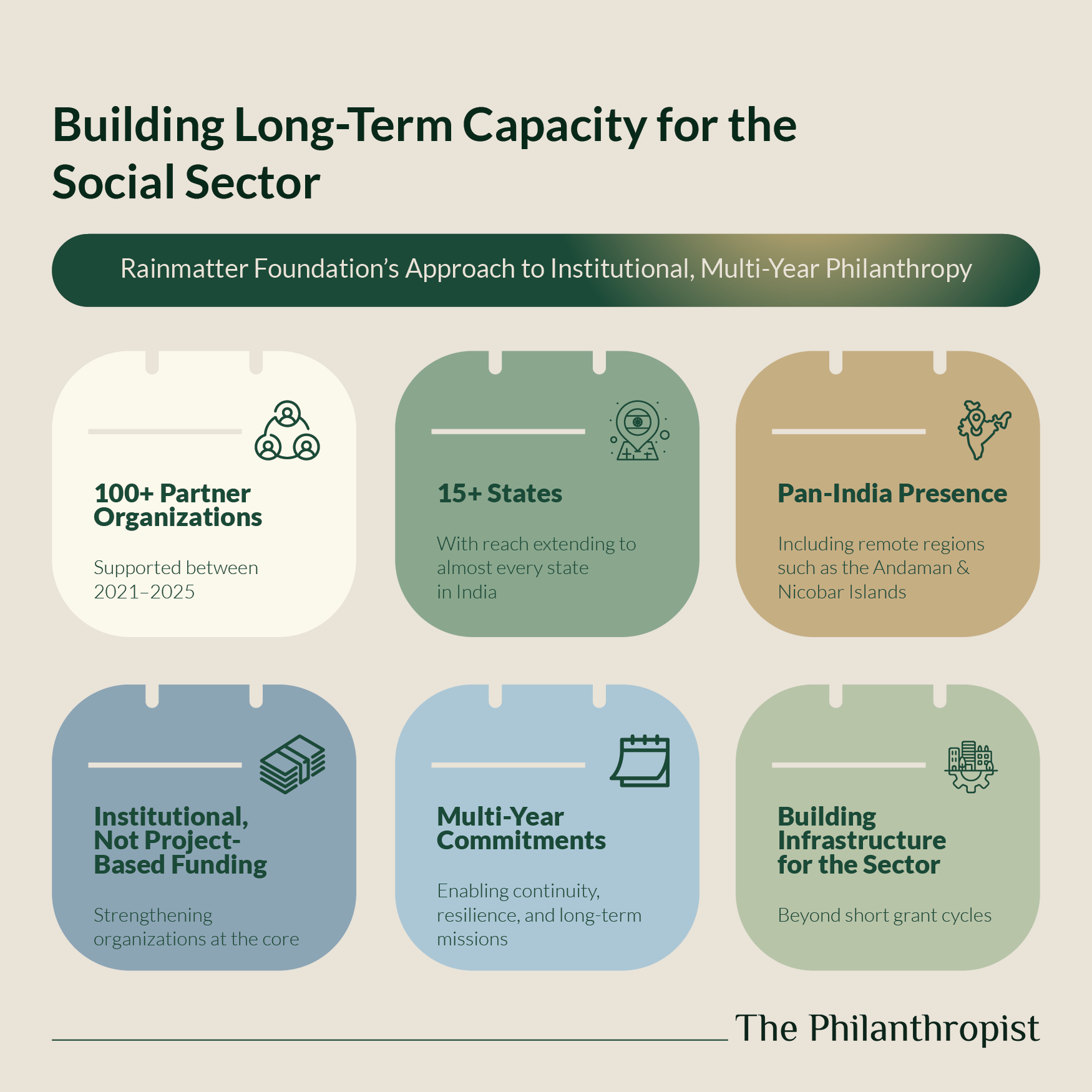
Strengthening the social sector with sustained multi-year support
How Rainmatter Views the Climate Landscape — and its Own Role in it
It’s easy to fall into the traps of pessimism when the data is so bleak. In the first nine months of 2025, almost every single day brought a new climate crisis somewhere in India, with over 4,000 lives lost, hectares of crops ravaged, and thousands of homes affected. In 2024, the country experienced extreme weather events — floods, heatwaves, landslides, and droughts — on 322 of the 366 days. Rainmatter works in full awareness of these numbers. As Kailash puts it, “If you look at the last five years, almost every indicator of planetary health has gone downhill, despite all the big conversations, COPs, pledges, whatever else.” What follows for Rainmatter, then, is what he calls “functional pessimism”. He explains, “I know that in all likelihood, things won’t improve dramatically because these are vast, planetary problems. But we must still do what we can. It’s part of the human condition that despite mountains of evidence, you still try.”
That realism has shaped how Rainmatter understands the problem itself. Over time, Kailash says, their thinking moved away from a narrow framing of climate as temperature targets “In the 2000s, climate change was about global warming — it was about 1.5°C and carbon emissions. But by the mid- to late 2010s, there was an understanding that climate is an everything-all-at-once problem... Economic decisions, development trajectories of countries — everything plays a significant role in climate outcomes. What begins as an environmental issue often surfaces first as a social one: migration after repeated disasters, disrupted livelihoods. “It’s deeply interdisciplinary,” he says. “It’s about gender rights, cultural identity, the health of water bodies — everything is interconnected.”
This framing carries direct lessons for problem-solving within the landscape. “You cannot solve river pollution without solving the industrial problem. You can spend all your effort cleaning a river, but it’ll be polluted again in five years unless you deal with industry, policy, and regulation. Even if your primary focus is lakes, soil, livelihood, you have to zoom out and understand the periphery of the problem,” Kailash explains.
This expanded understanding of climate — as an overarching problem that cuts across livelihoods, policy, ecology, data, and culture — shapes how Rainmatter positions itself within the ecosystem. Rather than operating as a central actor or claiming ownership over outcomes, the foundation is deliberately designed to work laterally. “At Rainmatter, we see ourselves as one cog in a much larger machine. This problem is far too large for any one champion or organization. We do our work with hope, but we don’t see ourselves at the center of anything.” Funding, Kailash insists, is one tool of many. “While we have a fairly large corpus that we’ve committed to the foundation, grantmaking is not how we see ourselves. Rainmatter is an ecosystem weaver. We have a massive partner network, and many organizations in that network aren’t ones we’ve funded.”
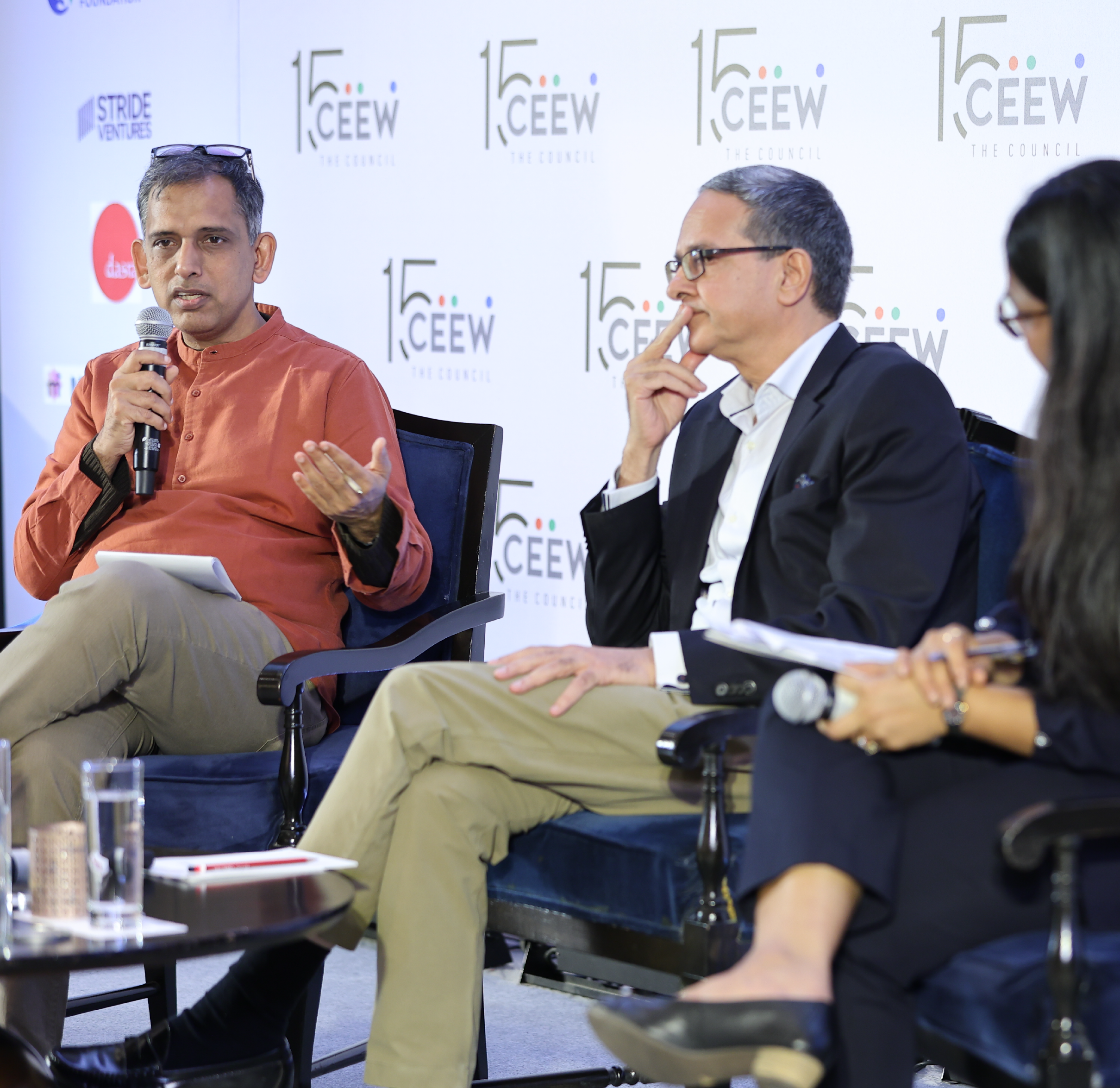
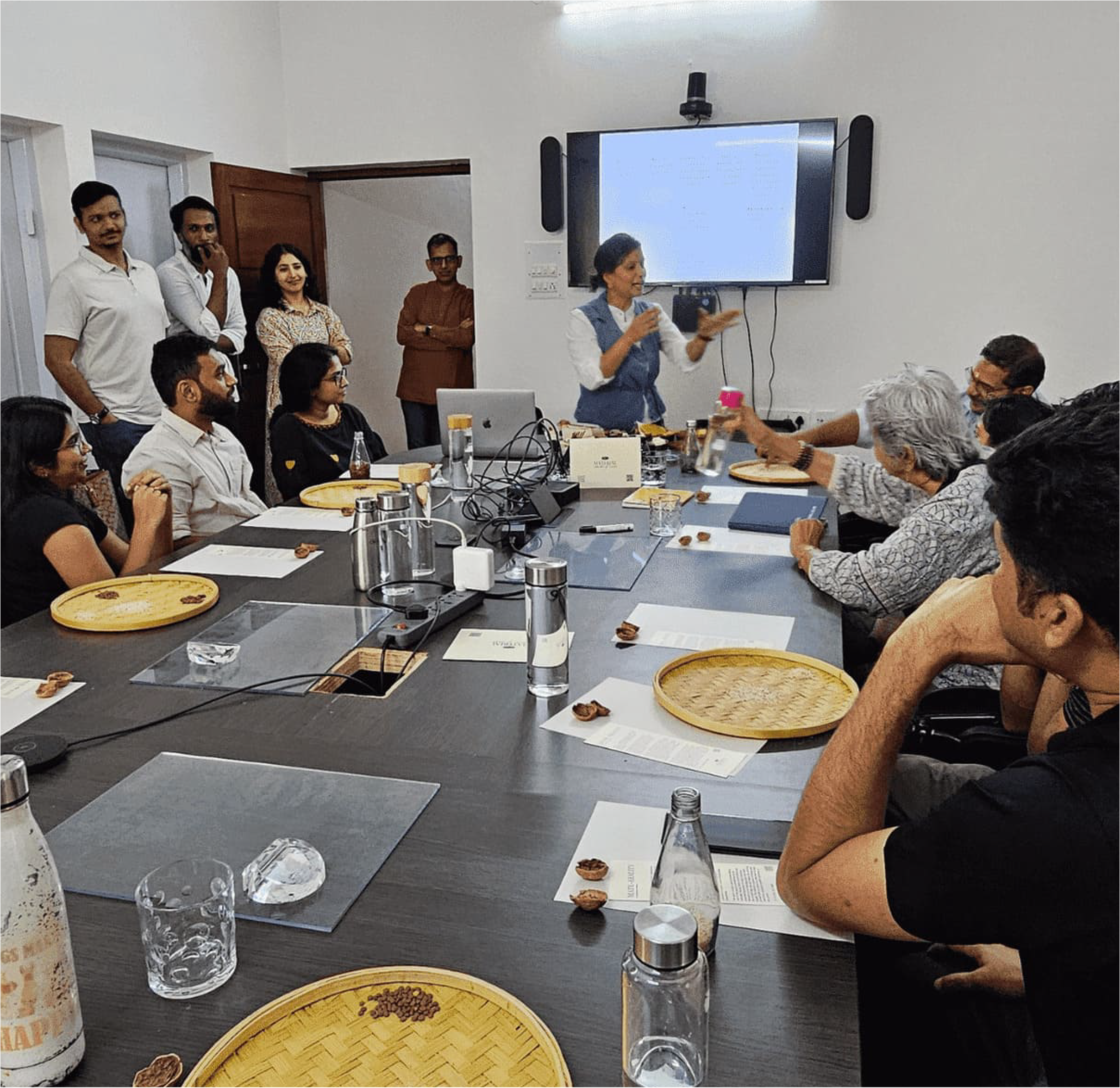
Their posture is often most visible not in what Rainmatter funds, but in how it makes convenings and connections possible within the landscape. For Abhishek Jain, Director of Green Economy & Impact Innovations at the Council on Energy, Environment and Water, funding barely registers as the foundation’s defining feature. “When I think of the Rainmatter Foundation, funding is the last thing that comes to mind. The brainstorming sessions with the Rainmatter team have been very enriching and forward-looking, and yet grounded in reality. Rainmatter’s ability to ask the right questions, rather than rush to solutions, has shaped our work in meaningful ways.” He points, too, to the less visible but just as consequential role Rainmatter plays in stitching the ecosystem together: “Equally valuable have been the organic connections that Rainmatter has enabled across the ecosystem — from Pradan’s on-ground insights informing policy-level work to collaborations with CoRE Stack on the data side. It has been a genuine partnership throughout, unlike any typical funder–grantee relationship.”
Arjun Singh, Senior Project Manager at the Ecological Restoration Alliance–India, describes Rainmatter as an ally precisely because of its panoramic view of the field. “The Ecological Restoration Alliance- India (ERA-India) is an informal alliance of organizations, collectives and 500+ individuals, who together are laying the foundation for ecological restoration to flourish as a field and practice in India.” Given that restoration spans sectors and geographies, he adds, “and given Rainmatter Foundation has a wider view of the work being undertaken by CSOs across India, they are a natural ally in nudging, connecting and bringing together partners in our mission to restore landscapes, for biodiversity and people.”
The premise, for Rainmatter, is simple: a problem that cuts across systems cannot be solved within silos. “Rainmatter is an interdisciplinary organization that brings people together and tries to bring a multidimensional lens to the work,” explains Kailash.
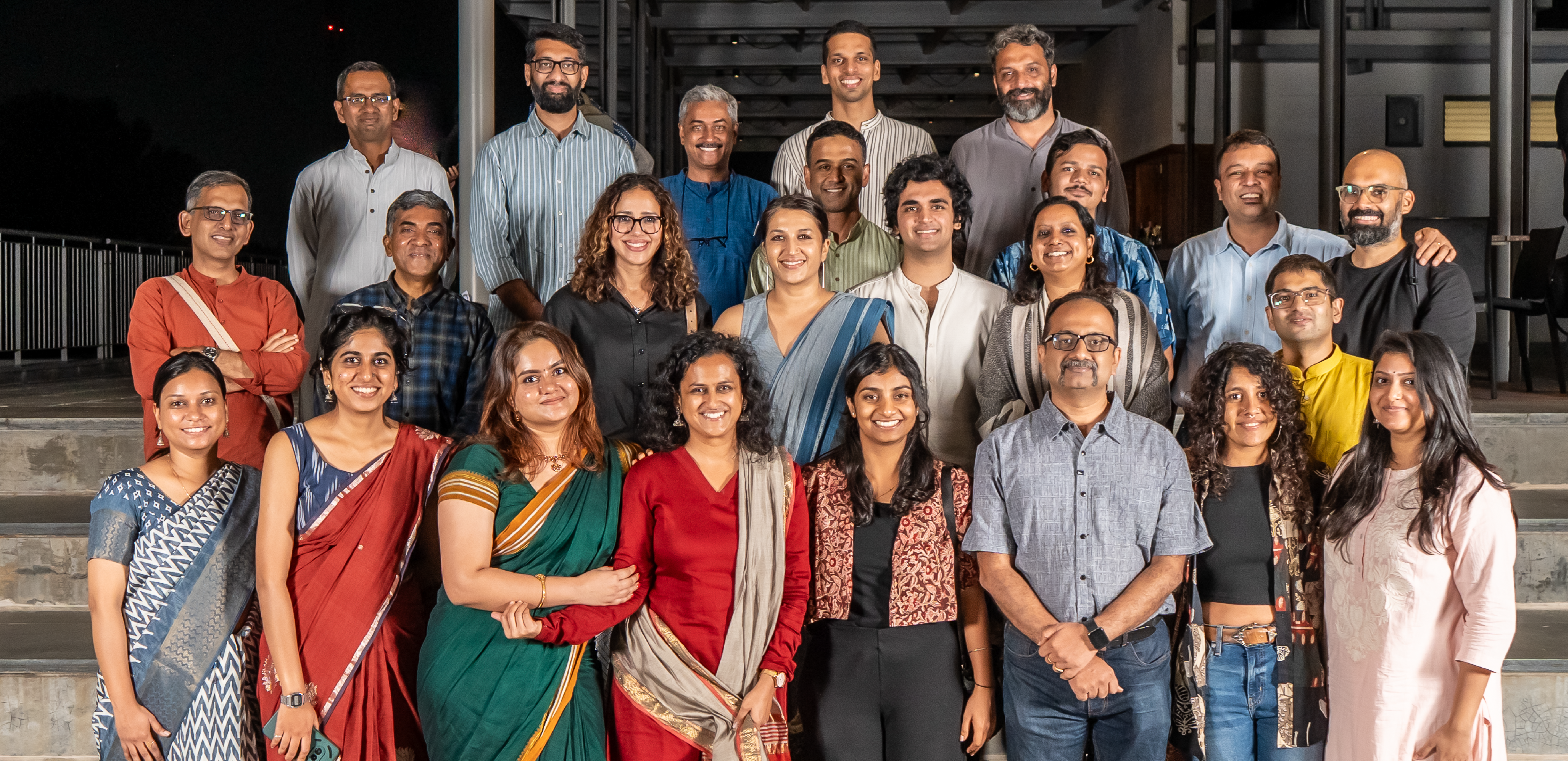
The people driving Rainmatter’s impact
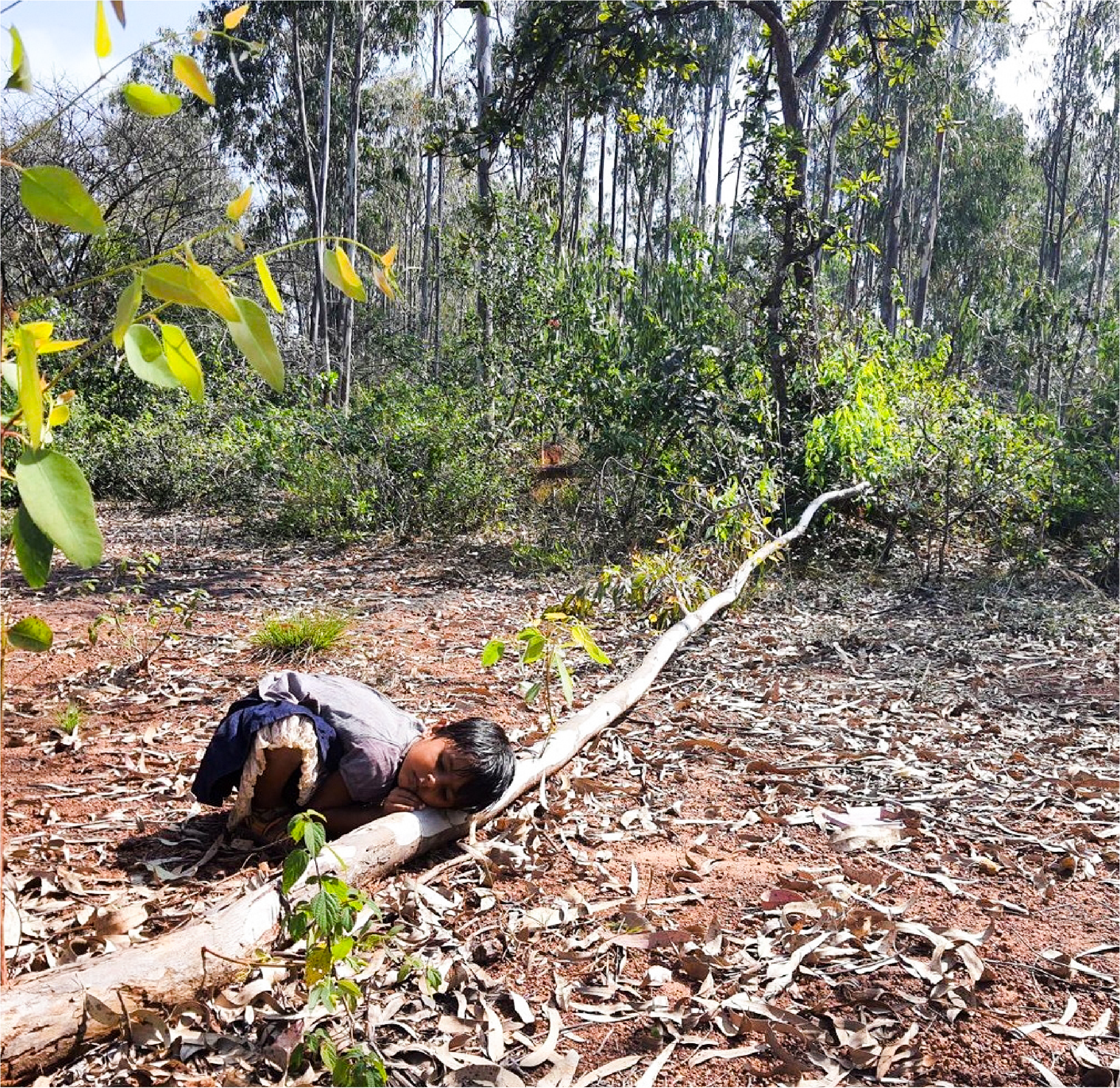
Looking Towards 2047: Where India’s Social and Ecological Futures Converge
The country is already racing toward its aspirations for development by 2047 with overlapping pressures — urbanization, resource stress, heat, polluted rivers, shrinking biodiversity, and a population whose wellbeing is inseparable from these problems. In Kailash’s view, philanthropy will matter only if it recognizes that the social questions shaping India’s future are bound to its ecological ones. Once again, he strongly advocates open-mindedness to an interdisciplinary lens. “From a philanthropic perspective, organizations working on social problems, such as inequality, poverty, and quality of life, need to be open-minded to the interconnections of these issues with biodiversity and environmental health. None of these issues exist in isolation, and are directly or indirectly tied to broader climate-centric issues. Similarly, many biodiversity conservation issues are deeply tied to socioeconomic realities. Forest rights and state vs. community conservation, for example. You simply cannot cut people out of policy.” That reframing is essential for an India that will be more urban, more aspirational, and more climate-vulnerable by mid-century.
India’s next phase, then, will demand a kind of philanthropy that is less about filling gaps and more about reshaping the systems that create them. If the country is to reach 2047 with any real measure of equity, health, or ecological stability, funders will have to confront the hard truth Kailash keeps returning to: social progress and environmental resilience rise and fall together. That means backing institutions that can work across disciplines, resisting the urge to treat climate as a niche theme, and supporting long-term, collaborative, community-rooted solutions even when they defy conventional impact metrics. The work will be slow and messy, and the path ahead full of complications. But it’s critical, nonetheless, that India sees its human future deeply entwined to its ecological one, and philanthropy must, too.


YOU MAY ALSO LIKE
Read more

Read more